Character
The Story of Amber notes
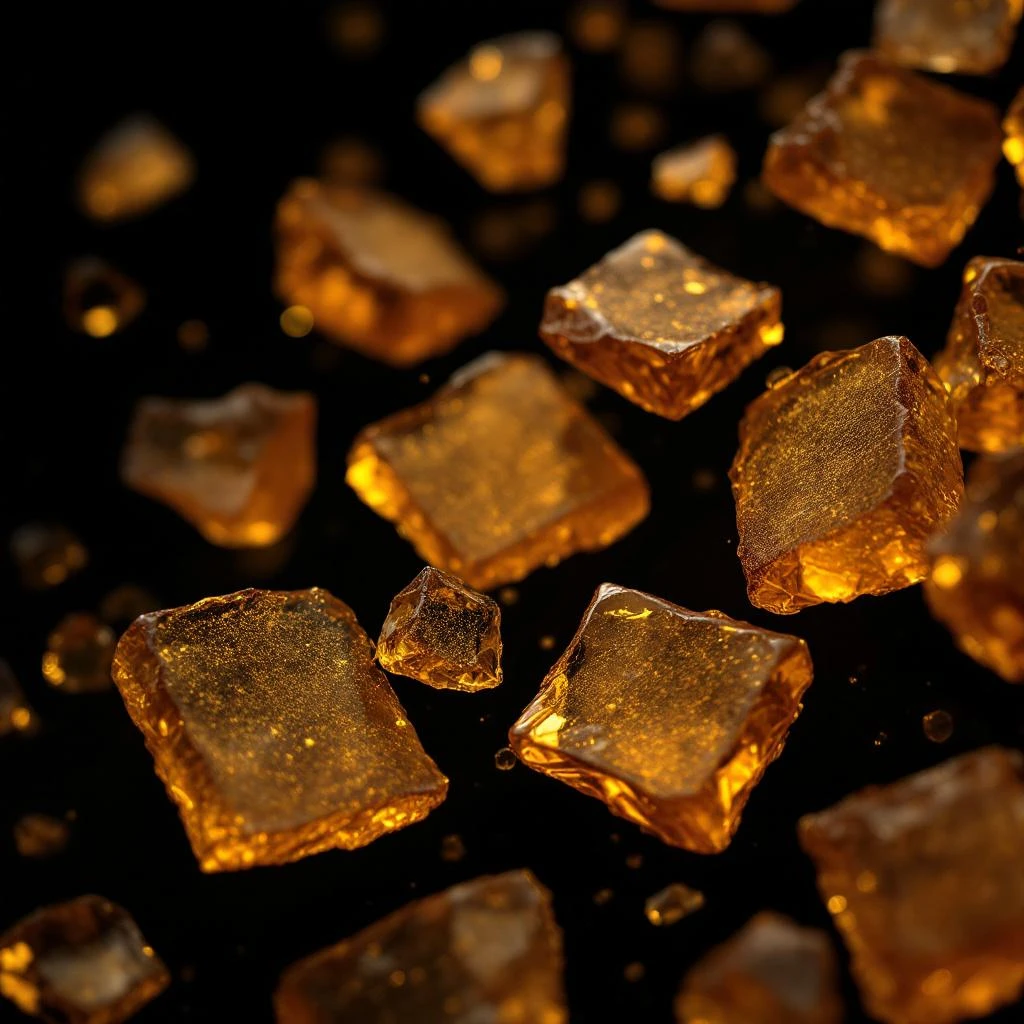
Amber is a warm, sensual accord built from labdanum, benzoin, and vanilla—a perfumery fantasy that captures the golden glow of ancient resin without using it.
Heritage
Amber accord traces its roots to ancient Egypt, where Kyphi incense blended honey, wine, and aromatic resins into sacred formulations used for religious offerings and personal ritual. Arabian perfumers of the classical era refined these sweet, resinous combinations, laying the groundwork for what we now call amber. The Greeks and Romans traded Baltic fossilized amber as a precious material, believing it held medicinal and magical properties, though perfumers had already begun approximating its warmth through botanical alternatives. By the late 19th century, synthetic vanilla enabled mass production of amber accords independent of natural scarcity. In June 2021, Michael Edwards—whose Fragrance Wheel organizes the global fragrance industry—officially retired the term Oriental, replacing it with Amber across all English-language classifications. The change reflected a broader industry shift toward culturally sensitive terminology while honoring the sensory truth of what these fragrances actually evoke: warmth, resin, and golden depth.
At a Glance
1
Feature this note
Mediterranean Basin / Southeast Asia
Primary source region
Ingredient Details
Accord construction
Resin (labdanum, benzoin), cured pods (vanilla), and sclareol (clary sage for ambroxan)
Did You Know
"In 2021, Michael Edwards officially renamed the Oriental fragrance family to Amber across all English-language classifications."