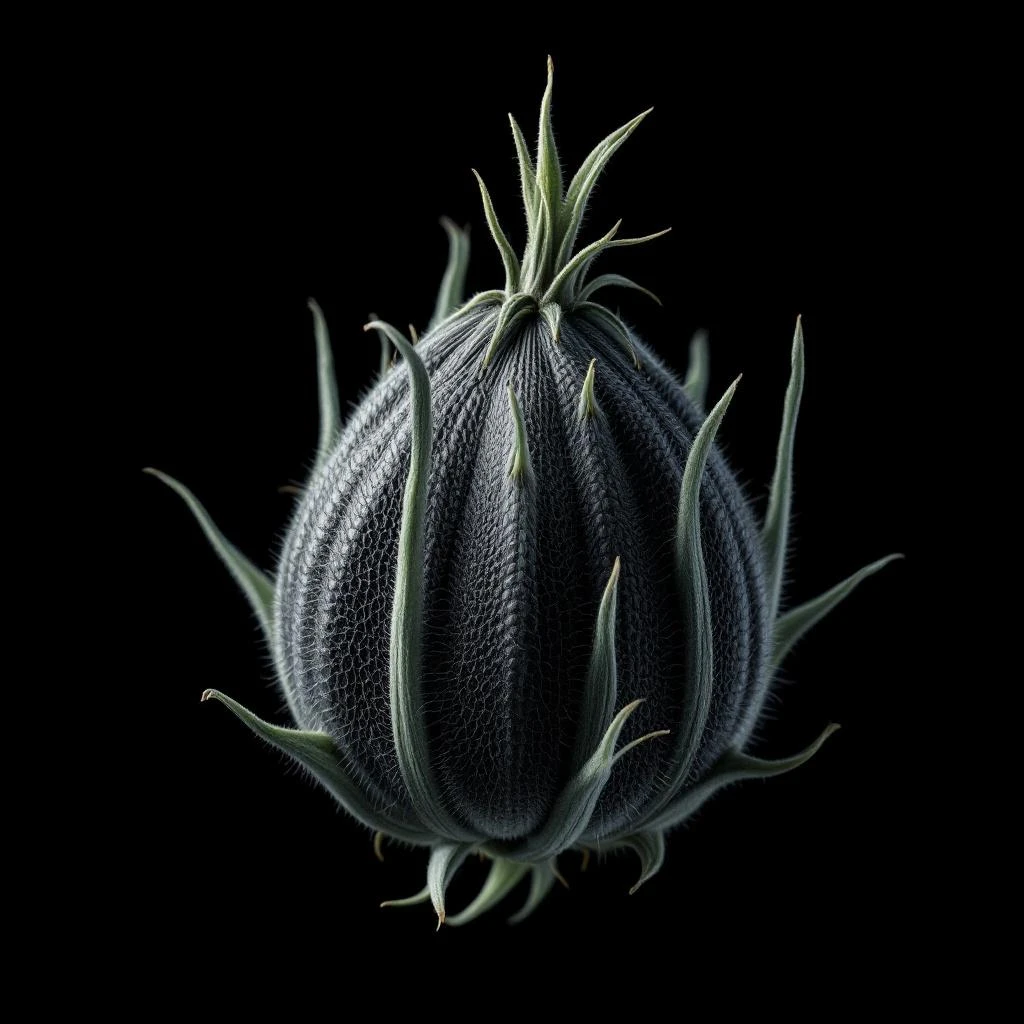

Character
The Story of Ambrette seed
The seed of Abelmoschus moschatus, ambrette yields a warm, animalic musk once prized as a plant-based alternative to costly animal musk. Discreet yet tenacious, it brings sensual depth to fine fragrances.
Heritage
Ambrette has roots in Ayurvedic and traditional medicine across India, where practitioners once valued the seeds for warming, aphrodisiac qualities. The French name ambrette comes from ambre, meaning ambergris, reflecting a shared warm, musky character that made the plant a natural aromatic substitute. Throughout Asia and Africa, the seeds found their way into beverages, cosmetics, and remedies before perfumers took notice. By the 19th century, as synthetic alternatives displaced natural musks, ambrette remained a rare, desirable material precisely because it offered a genuine plant-based answer. Today the seeds grow across East India, Madagascar, Seychelles, Vietnam, Ecuador, and Colombia. Its use in fine perfumery endures as a mark of quality and restraint.
At a Glance
1
Feature this note
India
Primary source region
Ingredient Details
Steam distillation and supercritical CO2 extraction
Dried seeds from hairy seed pods
Did You Know
"The botanical name abelmoschus derives from Arabic, literally meaning 'father of musk' — a nod to its aromatic power long before perfumery existed."