Character
The Story of Angelica
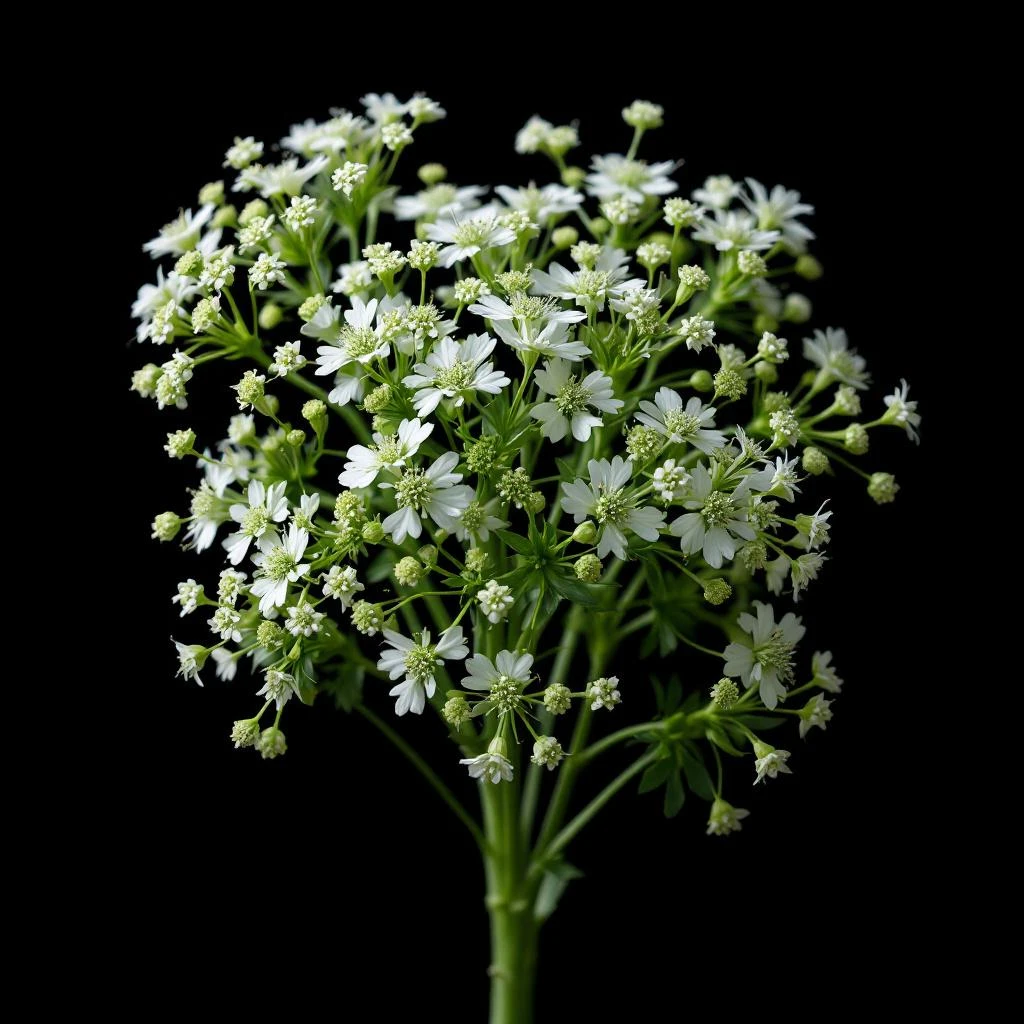
Angelica delivers a vibrant herbaceous top note with a uniquely musky, wood-like character. Both root and seed provide distinct facets, with root offering greater pungency. In perfumery, it acts as a synergist and fixative, anchoring brighter citrus accords while adding depth and longevity to blends.
Heritage
Angelica archangelica earned its celestial name through medieval legend. The plant was said to have been revealed by the Archangel Raphael to Charlemagne as a remedy against the plague ravaging his armies. During the Black Death, protective sachets containing angelica were hung around children's necks to ward off both physical illness and spiritual harm. European folk traditions credited the herb with the power to dispel evil spirits and necromantic influences. Beyond medicine, the aromatic root found its way into culinary use: candied angelica stems became a confectionery staple, while the essential oil found a permanent home in Chartreuse, the vivid green-yellow French liqueur. From protective amulet to perfume ingredient, angelica's journey spans a millennium of human history.
At a Glance
1
Feature this note
France
Primary source region
Ingredient Details
Steam distillation
Roots and seeds
Did You Know
"Angelica takes its name from Archangel Raphael, who reportedly revealed the plant to Charlemagne as a cure for plague."