



Character
The Story of Black Pepper
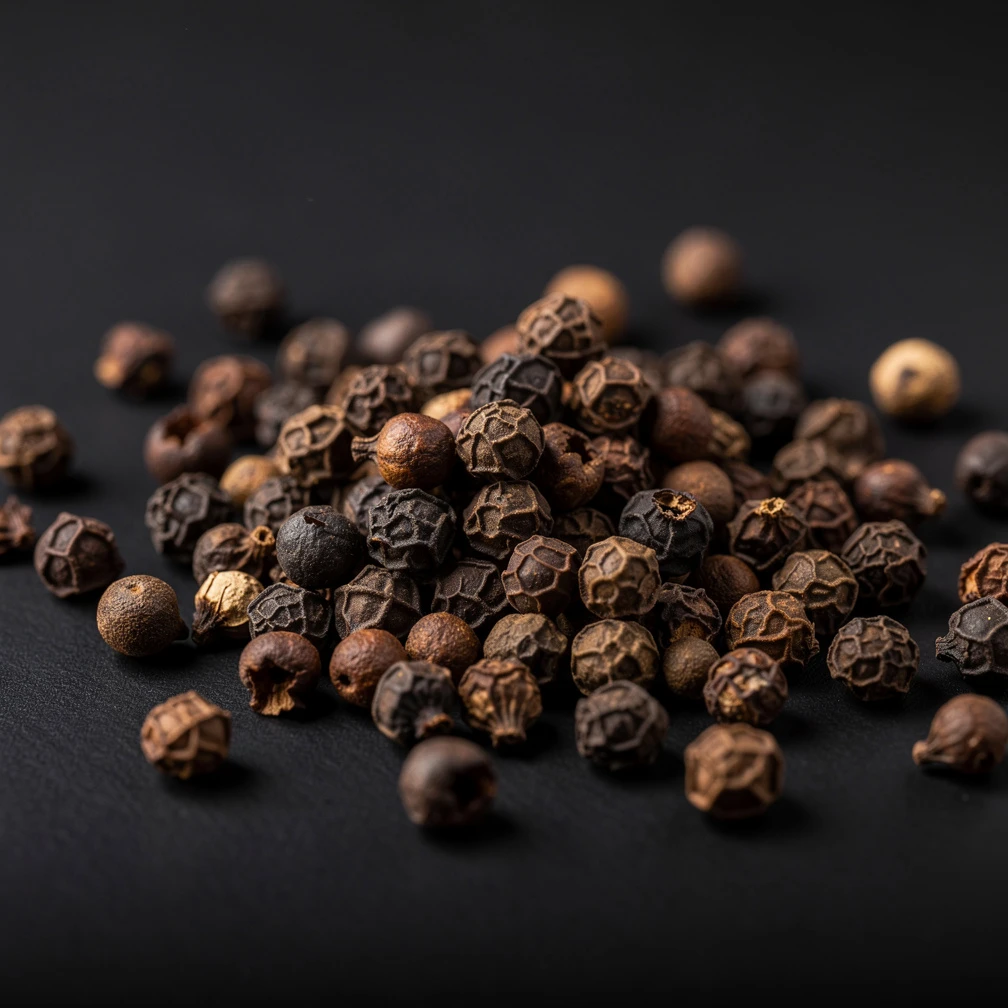
Black pepper is the dried, unripe berry of Piper nigrum, a climbing vine native to India's Malabar Coast. In perfumery, it adds a sharp, spicy warmth with subtle woody undertones and a dry, slightly pungent bite. Its versatility spans from brightening citrus openings to adding depth to oriental and woody bases.
Heritage
Black pepper is arguably the most consequential spice in human history. Cultivation began around 2000 BCE in India's Western Ghats, where Dravidian farmers developed techniques to train the climbing vines on rough-barked trees. By 1500 BCE, the Atharva Veda documented its use in Ayurvedic medicine, prescribing it for respiratory and digestive ailments. The discovery of black pepper in Ramses II's mummy (1213 BCE), with 2.3 kilograms stored in vessels marked "seeds of Punt," confirms trade routes spanning 3,000 miles from Kerala to Egypt.
In ancient Rome, pepper was currency as much as spice. Pliny the Elder lamented that 50 million sesterces left the empire annually for Indian pepper, and the Visigoth ransom of 410 CE demanded 3,000 pounds of it alongside gold. This "black gold" drove the Age of Exploration, motivating Vasco da Gama's voyage around Africa to reach Calicut in 1498. The Dutch, Portuguese, and British would fight brutal colonial wars for control of the Banda Islands and Malabar Coast. By the 1840s, chemists had isolated piperine, the alkaloid responsible for pepper's pungent heat. Today pepper accounts for roughly 20 percent of global spice trade, and its essential oil anchors compositions from Tom Ford's Noir Extreme to Hermès' Terre d'Hermès.
At a Glance
121
Feature this note
Natural
Botanical origin
India
Primary source region
Ingredient Details
Steam distillation
Dried unripe berries (peppercorns)
Did You Know
"When the Visigoths sacked Rome in 410 CE, they demanded 3,000 pounds of black pepper as part of the ransom payment, valuing it alongside gold and silver."
Pyramid Presence