Character
The Story of Black truffle
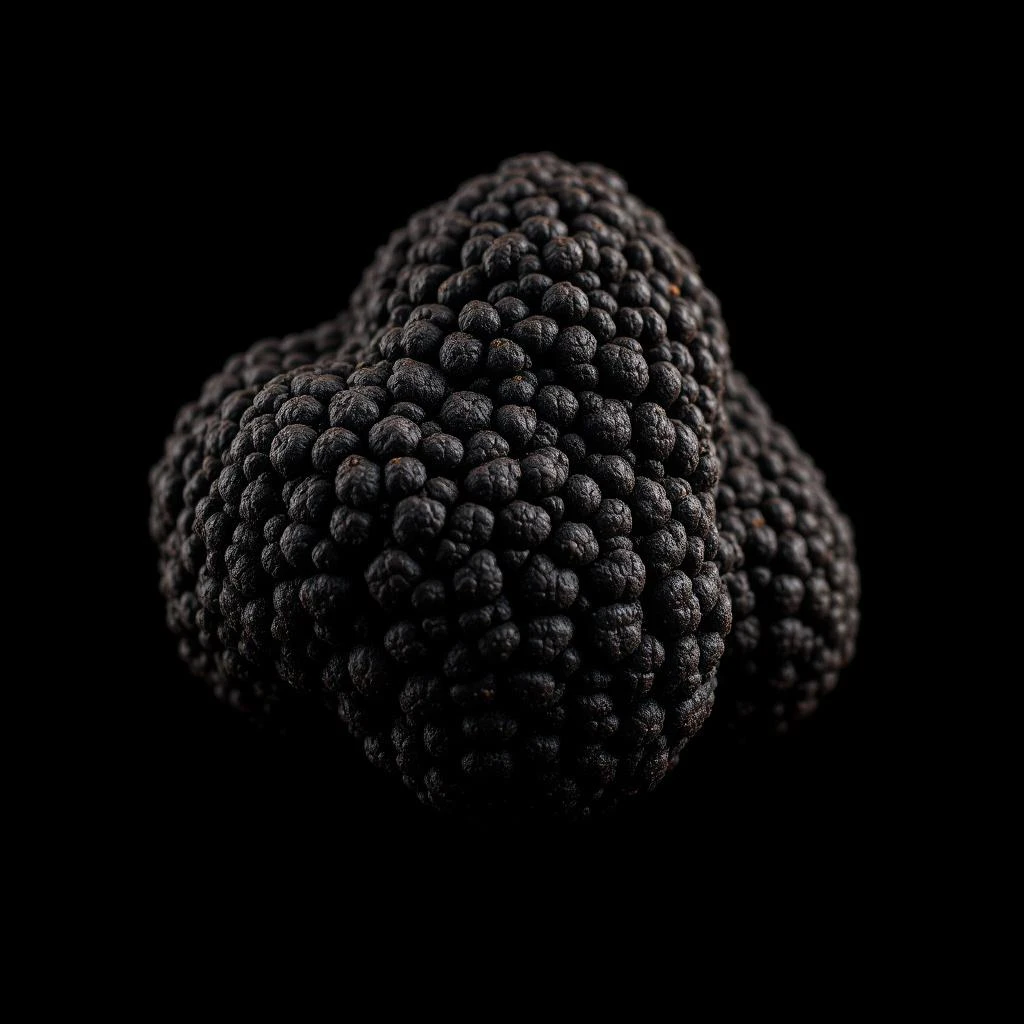
Black truffle (Tuber melanosporum) brings a dark, earthy, animalic depth to fragrance compositions. Its complex volatile compounds create rich umami, mushroom, and musky facets that few ingredients can replicate. Once a mystery to ancient civilizations, black truffle now anchors some of perfumery's most coveted signatures.
Heritage
Ancient civilizations attributed truffle origins to lightning, underground fires, and divine intervention. The Greek poet Nicander theorized truffles were silt transformed by internal heat, while Plutarch imagined them cooked in mud by thunderbolts. Despite the mystery, the ancient Mediterranean prized truffles as a luxury food and tonic.
Desert truffle juice entered Arabian traditional medicine by the 10th century, used for eye ailments and believed to possess aphrodisiac qualities. By the 18th century, French naturalists correctly identified truffles as subterranean fungi partnering with tree roots, though wild harvest remained unpredictable.
Modern truffle cultivation in France dates to the 1800s, with systematic orchards called truffières. The Périgord region became synonymous with black truffle production. When premium perfumery began seeking unconventional base materials in the late 20th century, truffle's brooding complexity attracted serious attention as a note that could anchor oriental, chypre, and leather compositions with singular depth.
At a Glance
1
Feature this note
France
Primary source region
Ingredient Details
Solvent extraction
Whole fruiting body
Did You Know
"The signature truffle scent comes from bis(methylthio)methane, the same compound that gives raw garlic its punch, reinterpreted here as something animalic and wholly addictive."