
Character
The Story of Burning Cherry
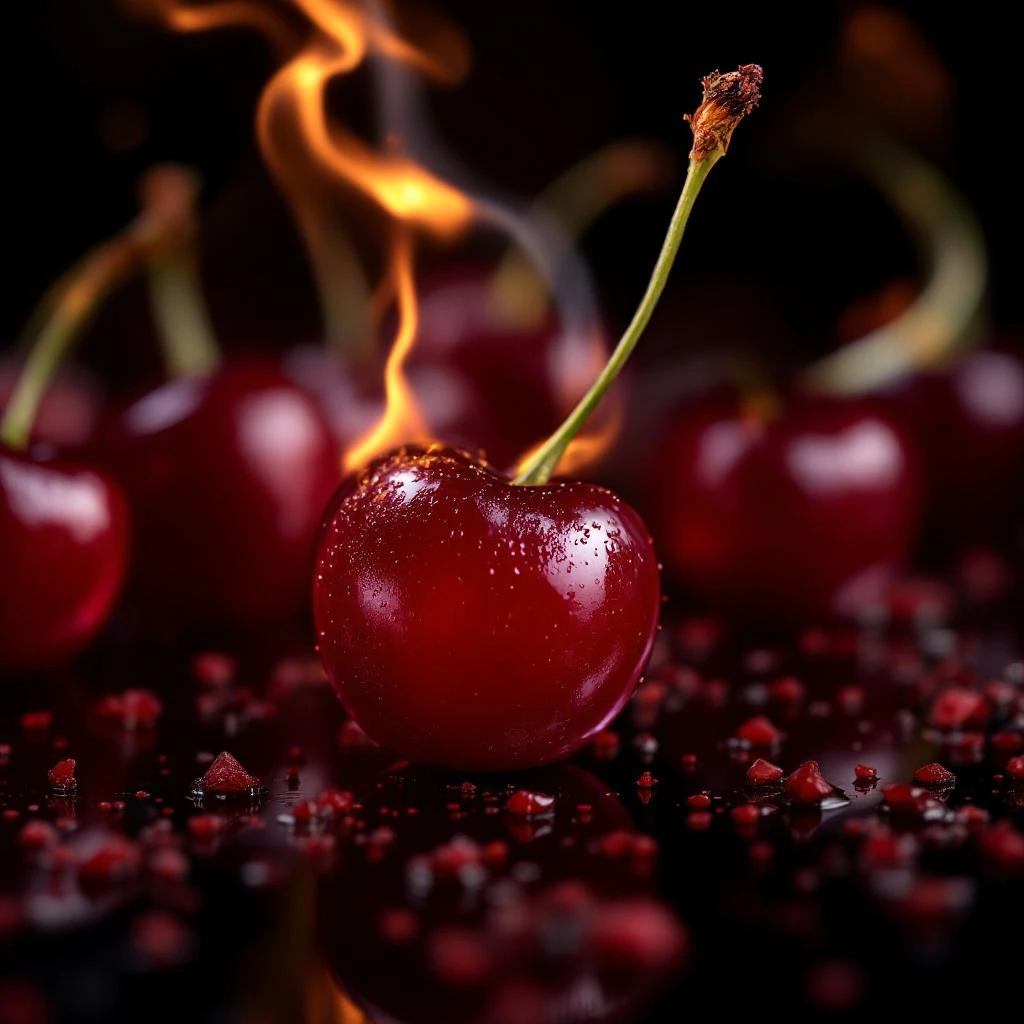
A smoky-dark accord that merges charred wood warmth with the sweet-tart depth of overripe cherries. Burning Cherry captures the moment when fruit meets flame—smoldering, intimate, and deeply addictive.
Heritage
The concept of burning fragrant materials dates to Egyptian ceremonial practices around 4500 BCE, when priests burned cedarwood and aromatic resins during rituals. The Romans later developed perfumum—meaning 'through smoke'—as a term for these aromatic burning practices. However, cherry as a distinct perfumery note emerged much later, driven by advances in synthetic chemistry during the late 19th century. The late 1870s saw the founding of companies like Haarmann & Reimer, which began producing the benzaldehyde and fruity esters that made cherry reconstruction possible. The 'burning' aspect became a deliberate creative choice in late-20th-century perfumery, when perfumers began combining smoky and fruity notes to create addictive, comfort-food-like fragrances that resonated with consumers seeking warmth and intimacy in their scents.
At a Glance
1
Feature this note
France
Primary source region
Ingredient Details
Reconstructed synthetic accord
N/A - Synthetic reconstruction using smoke aromachemicals (guaiac, birch tar, synthetic smoky molecules) and cherry-inspired compounds (benzaldehyde, fruity esters)
Did You Know
"Cherry doesn't grow in perfumery—the fruit's fleeting scent is reconstructed using benzaldehyde and other aromachemicals to achieve its characteristic almond-tinged sweetness."