Character
The Story of Datura
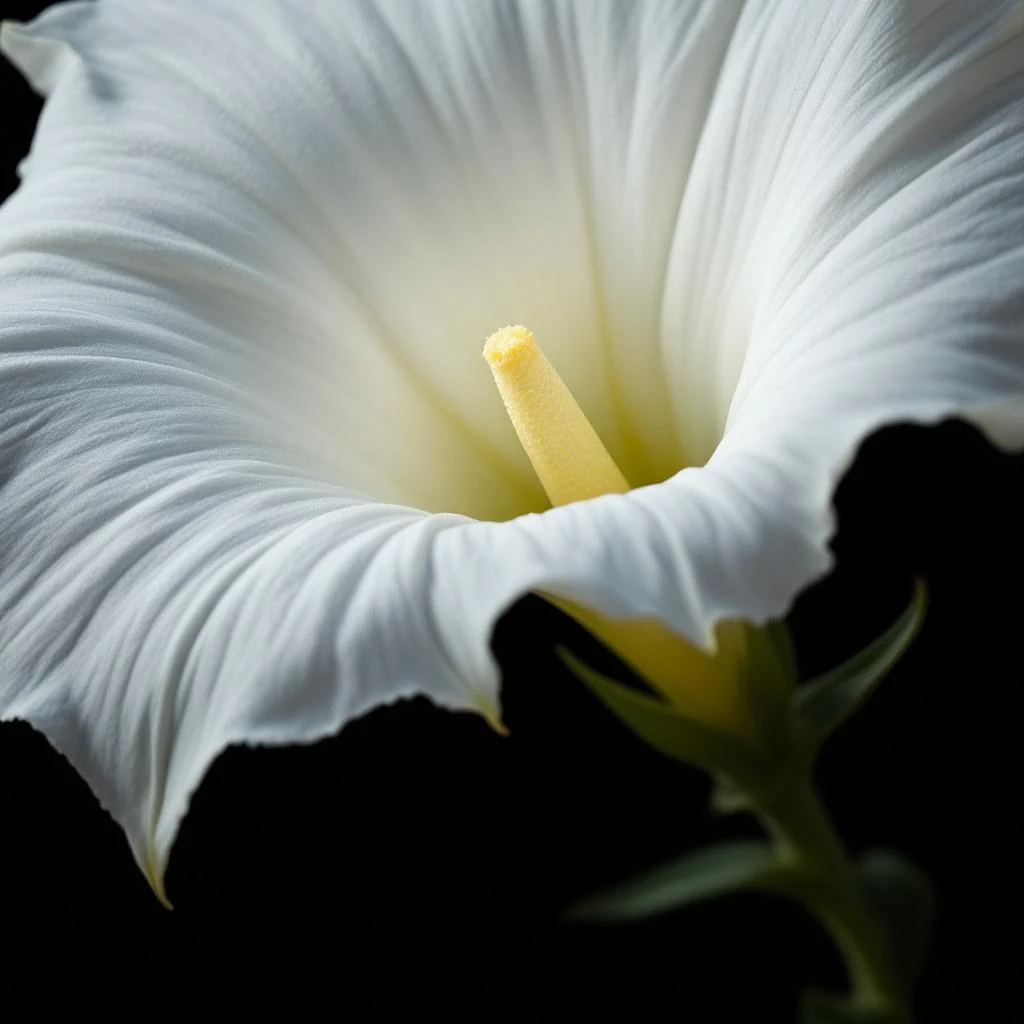
Datura's night-blooming flowers emit a hypnotic, creamy-white floral scent with indolic undertones—captured only through synthetic reconstruction, as no natural extract exists.
Heritage
Datura originated in South America and belongs to the Solanaceae family—the same botanical lineage as tomato, tobacco, and belladonna. The plant's large, trumpet-shaped flowers have long been prized as sacred across multiple cultures. Indigenous traditions used datura in rituals designed to induce hallucinogenic states, allowing participants to connect with the divine. In Haitian vodou practices, datura played a role in ceremonies associated with zombification. The plant carries genuine toxicity; ingestion can be life-threatening, which contributed to its mystical reputation. Its close relative Brugmansia shares the common name "angel's trumpet." While datura never became a mainstream natural perfumery ingredient due to the difficulty of extraction and safety concerns, its nocturnal, heady character has influenced fragrance designers who seek to capture that electric, otherworldly quality of white flowers after dark.
At a Glance
2
Feature this note
South America
Primary source region
Ingredient Details
Synthetic
Flower
Did You Know
"Datura flowers open only after sunset, releasing their full scent for a few hours before the sun rises."