Character
The Story of Drowsy Iris
The powdered treasure hidden in iris roots is one of perfumery's most coveted ingredients. Valued higher than gold, this aged botanical extract carries a velvety, powdery-violet signature that defines luxury fragrance. Discover why orris root commands such reverence—and such price.
Heritage
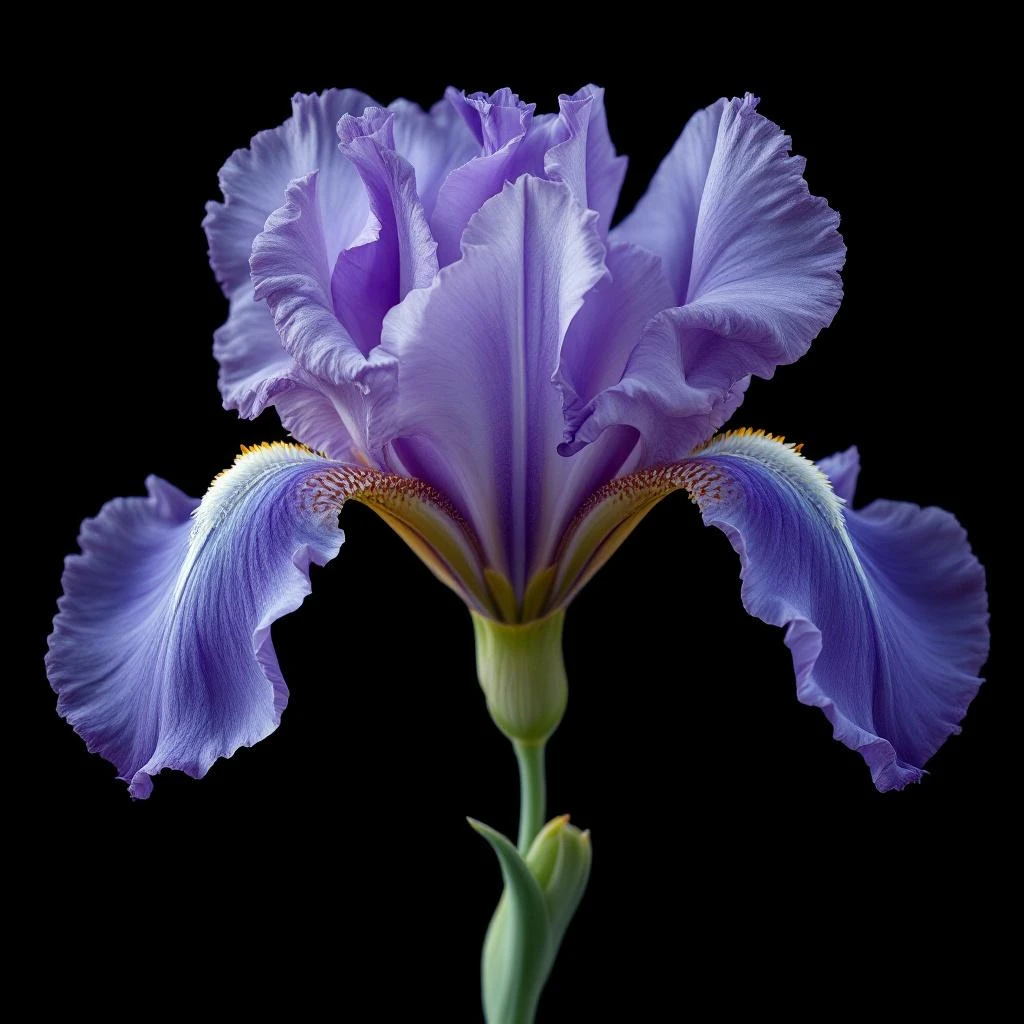
Iris has anchored fine fragrance since antiquity. Ancient Egyptians processed iris rhizomes into a perfume called Kophia, and applied the powdered root to cosmetics including kohl eyeliner. Greek physicians likewise valued the root for its purported healing properties, incorporating it into wellness preparations. During the Middle Ages, iris crossed into European courts where it became a favored ingredient in royal perfumes. By the 19th century, French perfumers had refined extraction techniques and iris occupied a central position in high-end women's fragrances. The ingredient rode a wave of popularity that produced several landmark formulas still recognized today. Though native to the Far East, cultivation shifted westward over centuries; today Italy and Morocco serve as the primary growing regions, with Italian Iris germanica and Moroccan Iris pallida supplying most commercial needs. The plant's purple or pallid flowers, though visually iconic, contribute almost no fragrance—the aromatic treasure lies entirely underground. Despite the emergence of synthetic iris compounds in the late 19th century that replicate irones at accessible price points, natural orris absolute and butter remain the standard for luxury perfumery, prized for aromatic complexity that synthetic substitutes have never fully matched.
At a Glance
2
Feature this note
Italy
Primary source region
Ingredient Details
Steam distillation / Solvent extraction
Rhizomes (roots)
Did You Know
"It takes 3 to 5 years of aging before iris rhizomes develop the aromatic compounds perfumers seek, making each harvest a decade-long commitment."
Pyramid Presence