Character
The Story of Exotic blossoms
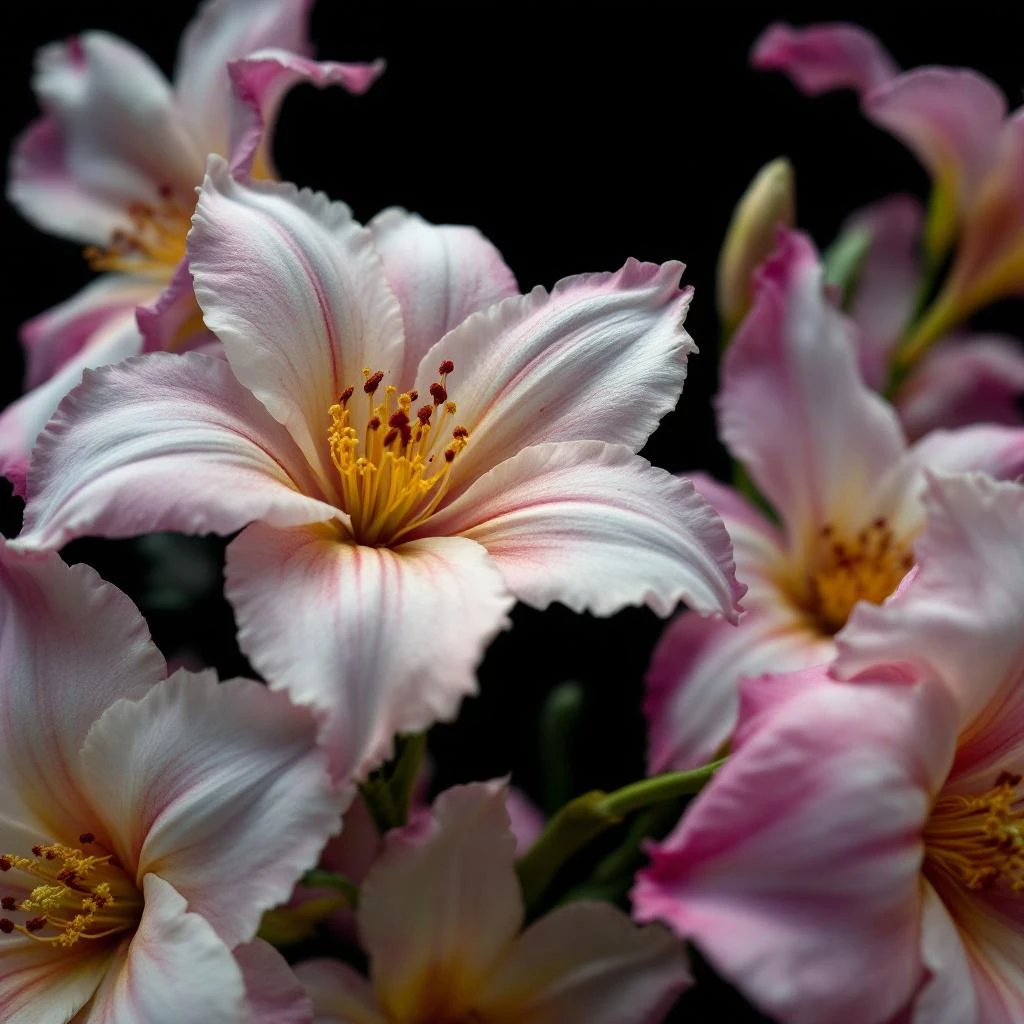
Exotic blossoms unite rare petals from distant islands into a vivid, sweet‑spicy floral accord that brightens any perfume with a touch of the far‑off garden.
Heritage
Cultures along the Indian Ocean prized exotic blossoms long before modern perfumery emerged. Ancient traders recorded the use of frangipani and ylang‑ylang in ceremonial incense as early as 500 BC. Arab chemists in the 9th century refined early distillation techniques to capture the flowers' scent, documenting the method in Al‑Kindi's treatises. By the 16th century, Portuguese explorers introduced these blooms to European courts, where they quickly became symbols of luxury. The French court of Louis XV commissioned the first large‑scale solvent extractions in the 1800s, laying groundwork for today's absolute production. Throughout the colonial era, the demand for exotic blossoms fueled plantation economies in Madagascar, Indonesia, and the Philippines, shaping both trade routes and local agricultural practices.
At a Glance
1
Feature this note
Indonesia
Primary source region
Ingredient Details
Solvent extraction
Flower petals
Did You Know
"The ylang‑ylang tree, a key source for exotic blossoms, can produce up to 30 kg of fragrant flowers per year, enough to scent a small boutique for a season."