

Character
The Story of Frangipani
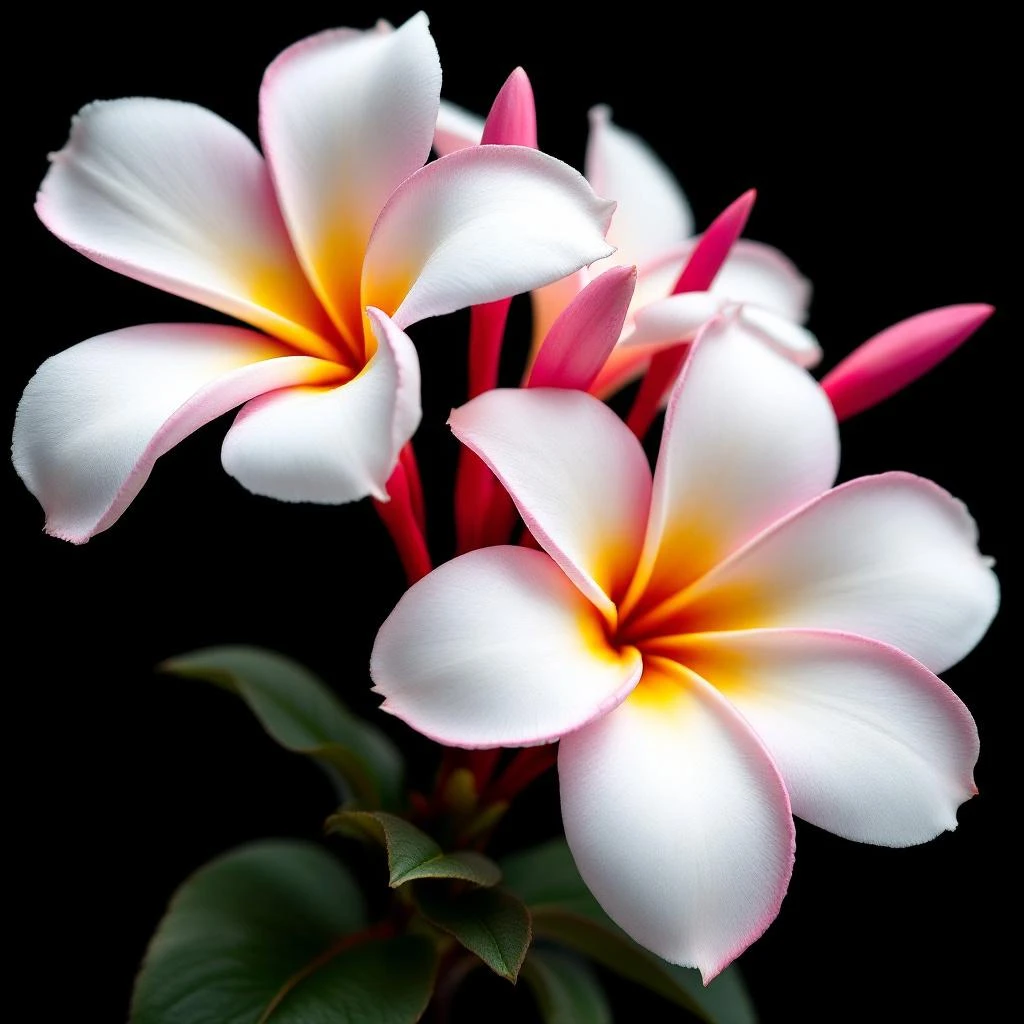
Frangipani delivers a creamy, tropical floral scent with rich apricot and almond facets. This note creates an instant sense of escape and warmth. Due to its delicate molecular structure, natural extraction is impossible, making it a masterful reconstruction in perfumery that captures the essence of sun-soaked island gardens.
Heritage
The frangipani story begins not in a tropical garden but in 16th century European court fashion. Marquis Muzio Frangipani, an Italian nobleman, developed an almond-scented glove treatment that became the rage among French aristocracy, even earning the approval of King Charles IX. When French colonists later encountered Plumeria in the West Indies whose scent mirrored this fashionable perfume, they named the flower frangipani. Linnaeus later honored French botanist Charles Plumier by assigning the Latin name Plumeria to the genus. Across Asia, the flower acquired profound spiritual significance. In Laos, frangipani (dok champa) became the national symbol. Hindu and Buddhist traditions regard it as sacred, featured in temple offerings across Bali and India where white petals symbolize purity of the soul. Pacific Islanders traditionally wear the bloom behind the ear, positioning it on the right to signal availability for love.
At a Glance
3
Feature this note
Floral
Olfactive group
Natural
Botanical origin
Mexico
Primary source region
Ingredient Details
Reconstruction (natural and synthetic blend)
N/A - Cannot be naturally extracted
Did You Know
"Plumeria flowers produce no nectar yet emit their most powerful fragrance at night to attract sphinx moths as pollinators."