

Character
The Story of Guava
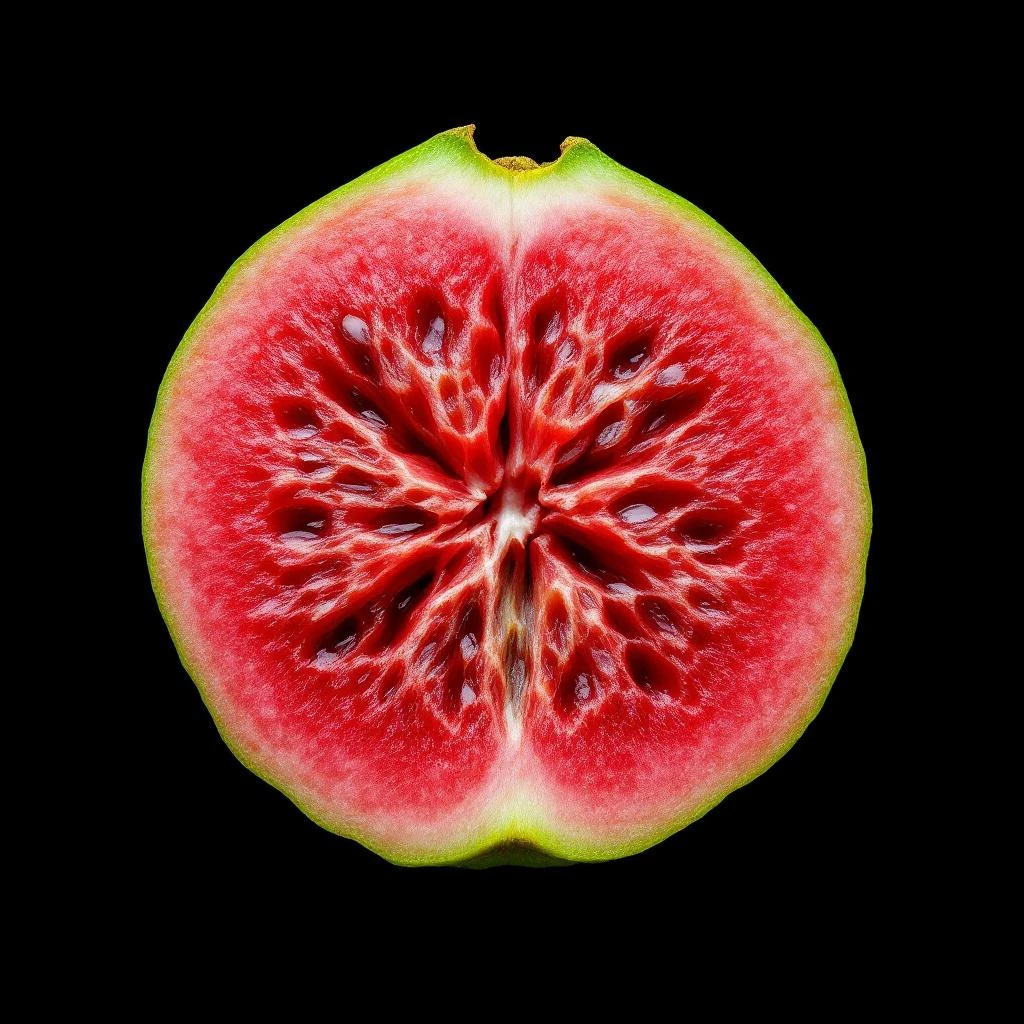
Guava brings a lively, exotic sweetness to perfumes, blending ripe fruit lushness with crisp green undertones and a subtle grassy edge. This tropical ingredient balances sweet and tart qualities, adding juicy brightness to floral, woody, and fresh compositions while preventing fragrances from becoming overly saccharine.
Heritage
The guava tree (Psidium guajava) originated in tropical South America, where indigenous peoples valued the fruit for both nourishment and medicinal applications long before European contact. Spanish and Portuguese explorers subsequently spread the plant across their colonial networks, establishing guava in the Caribbean, West Africa, and Southeast Asia by the 16th century. The fruit's hardiness allowed it to thrive in diverse tropical climates, transforming it into a staple across multiple continents. Yet despite its global reach as food, guava remained absent from perfumery until modern synthetic chemistry enabled the recreation of its delicate aroma. Today, guava appears prominently in tropical and fruity-floral fragrances, its popularity surging over 1,000 percent in fragrance-related searches according to recent market data. The ingredient bridges culinary heritage and contemporary fragrance craft, bringing an unmistakable sense of place to compositions.
At a Glance
1
Feature this note
Brazil
Primary source region
Ingredient Details
Synthetic recreation via laboratory synthesis
Fruit (recreated via molecular synthesis)
Did You Know
"Unlike rose or jasmine, guava cannot yield an extractable essence. Perfumers replicate its character entirely through synthesis, making it a lab-crafted tropical note in your fragrance."