Character
The Story of Gurjun Balsam
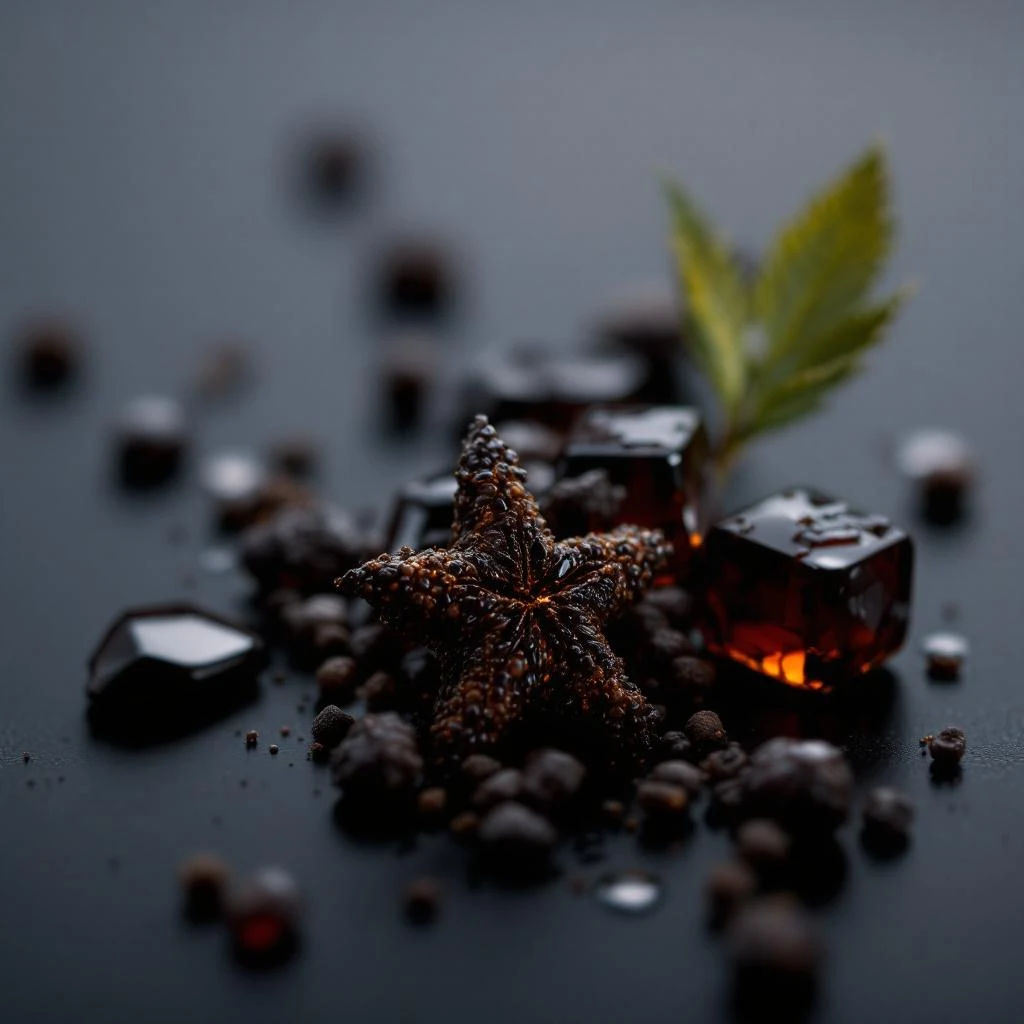
A natural resin harvested from Dipterocarpus trees in Southeast Asia, Gurjun balsam brings rich, woody depth with smoky balsamic undertones. Perfumers prize it as a base note fixative that extends fragrance longevity while anchoring oriental and woody compositions.
Heritage
The Andaman Islands and eastern India have been home to Dipterocarpus turbinatus for millennia, with indigenous communities developing intimate knowledge of the tree's resinous gifts. In Ayurveda, practitioners known as Gurjun, Chhaagakarna, or Ajakarna classified this material as valuable for respiratory ailments, using it to address asthma, chronic bronchitis, and excess mucus accumulation. The resin also appeared in traditional medicine across Cambodia, where it served dual purposes: healing preparations and practical applications like torch-making. European traders encountered Gurjun balsam during colonial expansion into Southeast Asia during the 18th and 19th centuries. Perfumers in France and England quickly recognized its value as a fixative, recognizing that its sesquiterpene richness could extend the life of lighter fragrance components. The 1977 release of Yves Saint Laurent Opium demonstrated its potential in modern perfumery, using Gurjun to weave smoky depth through the perfume's iconic oriental structure. Today, the ingredient bridges traditional Ayurvedic practice and contemporary fragrance creation, carrying centuries of olfactory history in each drop.
At a Glance
4
Feature this note
India
Primary source region
Ingredient Details
Steam distillation
Oleo-resin from bark
Did You Know
"In Cambodia, communities traditionally used Gurjun resin to make torches, turning fragrant bark into practical firelight centuries before perfumery."
Pyramid Presence