


Character
The Story of Indian Tuberose
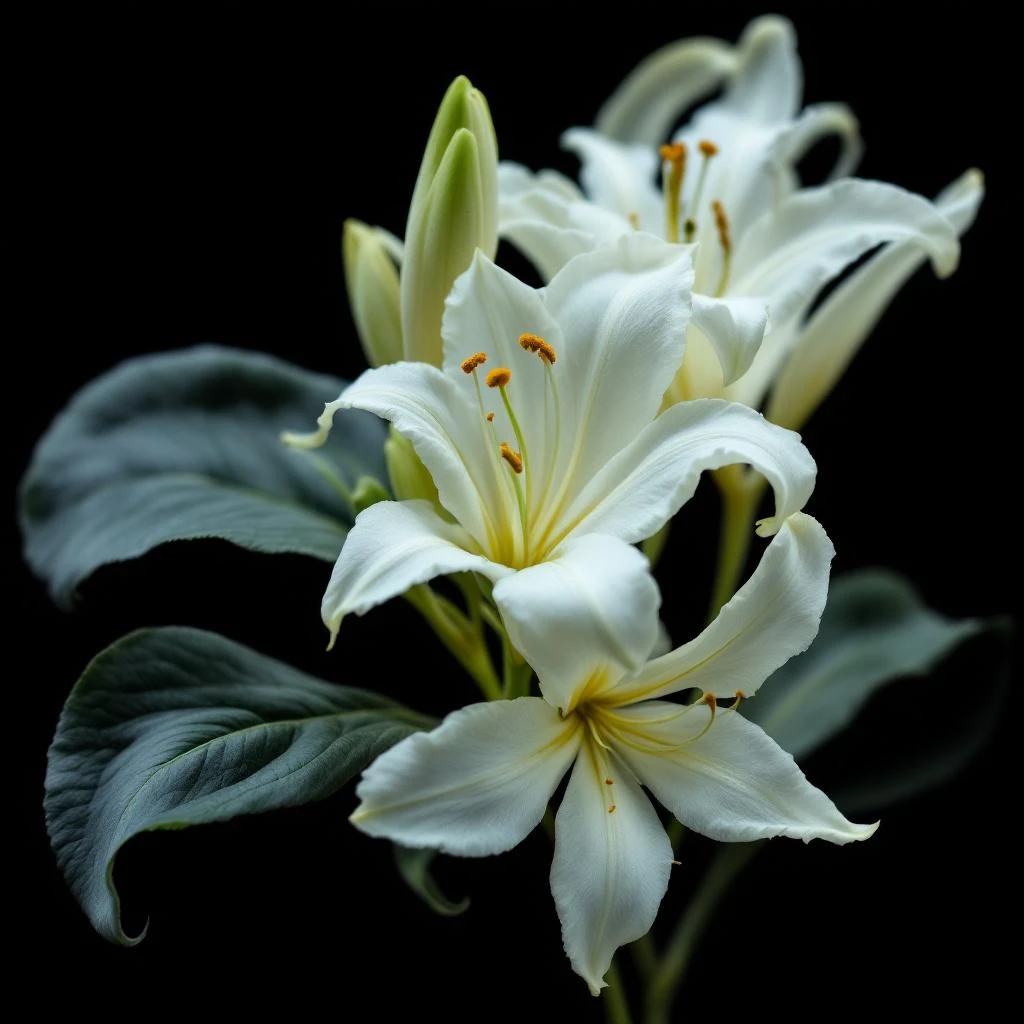
Indian tuberose (rajnigandha, meaning 'night-blooming fragrance') carries a hypnotic bouquet of honeyed nectar, creamy gardenia, and narcotic white florals. India now leads global cultivation of this storied flower, supplying fine perfumery's most seductive heart note since ancient times.
Heritage
Tuberose originated in Mexico, where Aztecs called it Omixochitl ('bone flower') and deployed it in chocolate and religious rituals. Spanish conquistadors carried it to Europe in the 16th century, where it acquired associations with sensuality and danger. During the Italian Renaissance, authorities prohibited unmarried women from entering tuberose gardens, fearing the flowers' bewitching influence. Louis XIV planted thousands of bulbs at the Trianon to perfume Versailles. Victorian writers debated tuberose's corrupting influence obsessively. In India, rajnigandha has anchored celebrations from weddings to religious ceremonies for generations, prized for the same narcotic floral intensity that once maddened European courts. Today India ranks among the world's primary producers, alongside Egypt and the Comoro Islands, supplying fine perfumery with this complex, controversial bloom.
At a Glance
3
Feature this note
India
Primary source region
Ingredient Details
Solvent extraction
Flower petals (hand-harvested daily as corollas open)
Did You Know
"The Aztecs called it 'bone flower' and used its essence to flavor chocolate, a practice that predates modern perfumery by centuries."