Character
The Story of Italian blood orange
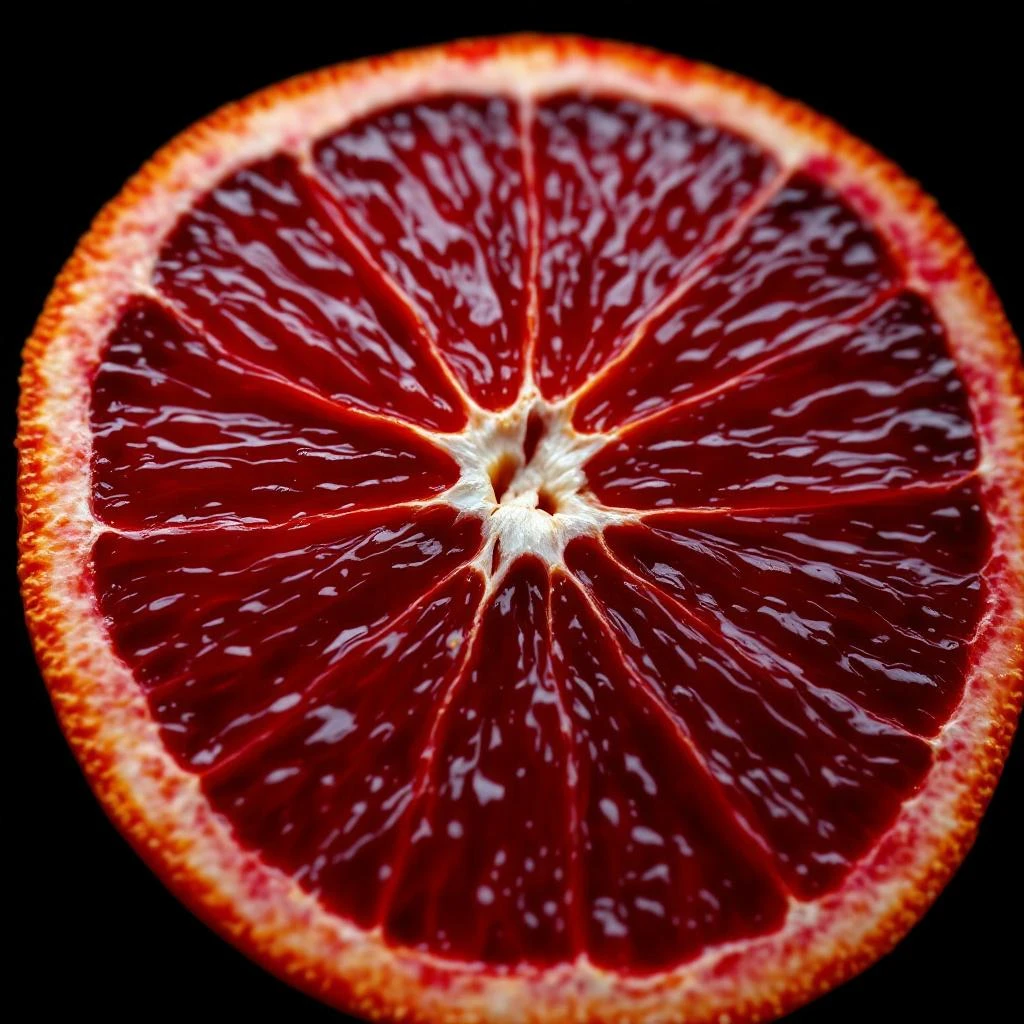
Italian blood orange oil delivers a tart, vibrant citrus burst tempered by deeper berry and raspberry undertones from its anthocyanin-rich pigment. This complex profile distinguishes it from standard sweet orange, adding both brightness and unexpected depth to fragrance compositions. The Tarocco variety, grown in volcanic Sicilian soil, produces particularly prized oil for perfumers.
Heritage
The first known written account of blood oranges appeared in 1646 when Jesuit botanist Giovanni Battista Ferrari documented a missionary's observation of red-fleshed oranges in the Philippines. The missionary described fruits with violet-colored flesh and a grape-like quality, marking the beginning of Western botanical awareness of this mutation. However, the Mediterranean cultivation of blood oranges traces back further through the Arab period of Sicily's history, from the ninth to eleventh centuries, when bitter oranges and lemons were first planted in the island's gardens. The three primary commercial varieties driving modern cultivation emerged in the early twentieth century in the Catania and Syracuse provinces. The Tarocco variety, discovered near the town of Pedagaggi around the early 1900s, became celebrated as the King of Oranges, thriving in the volcanic soils south of Mount Etna where cold night temperatures and intense winter sunlight combine to develop exceptional fruit quality. The Moro cultivar produces the deepest pigmentation with red-violet flesh, while Sanguinello adds another layer to Sicily's blood orange heritage. These varieties benefit from the unique microclimate created by Mount Etna's presence, where temperature swings between day and night trigger the anthocyanin pigments that give blood oranges their characteristic ruby coloring. The anthocyanins responsible, primarily cyanidin-3-glucoside and cyanidin-3-malonyl glucoside, form only under these specific cold-dependent conditions, explaining why blood orange production remains concentrated in this corner of Sicily. Today, over sixty germplasm accessions exist, with more than twenty Tarocco clones supplying markets from mid-December through mid-May.
At a Glance
1
Feature this note
Italy
Primary source region
Ingredient Details
Cold expression
Fruit rind
Did You Know
"The deep red color develops only when night temperatures drop significantly. A regulatory gene called Ruby, dormant in regular oranges, activates the anthocyanin pigments responsible for the characteristic burgundy flesh."