Character
The Story of Japanese Loquat
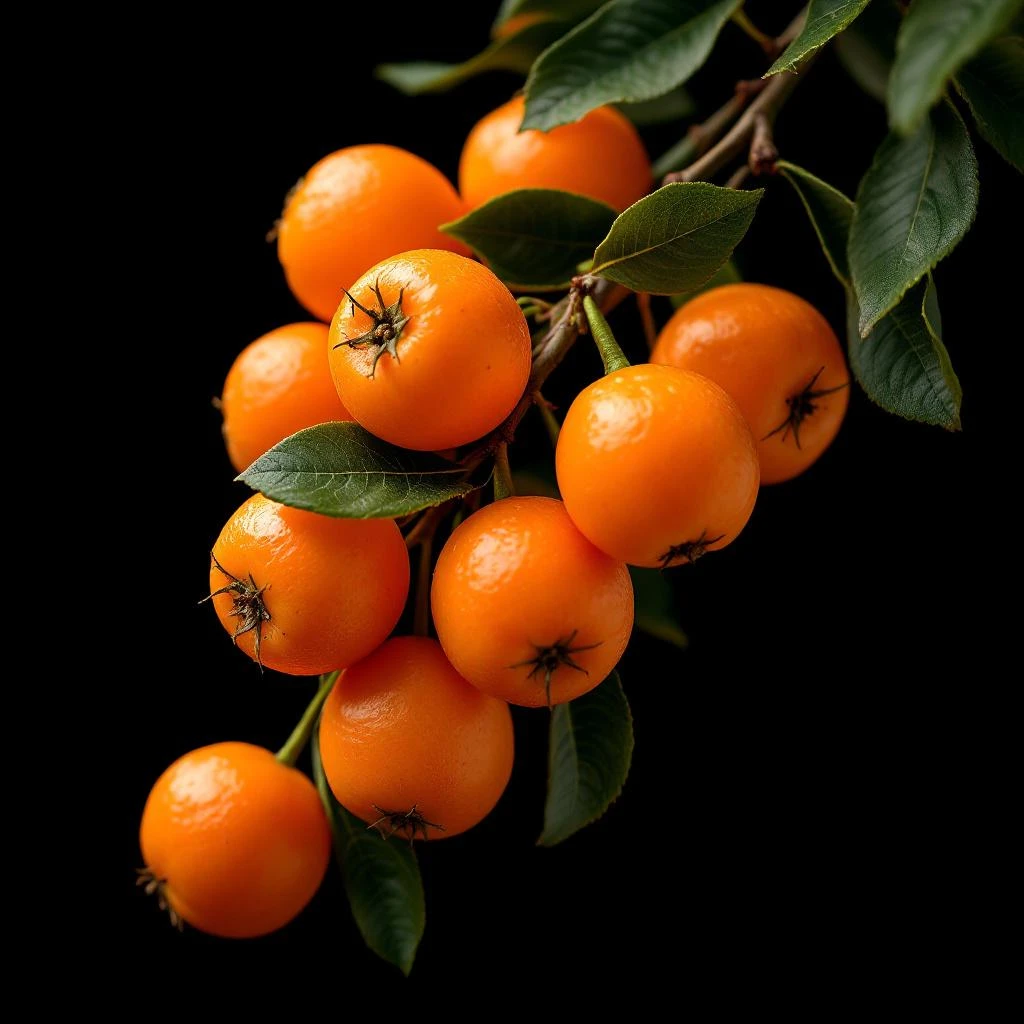
Japanese Loquat (Eriobotrya japonica) brings a bright, juicy sweetness to perfumery that evokes sun-ripened stone fruits and spring's first harvests. Its unique balance of honeyed warmth and citrus zest makes it a distinctive choice for contemporary fragrances.
Heritage
Loquat belongs to the Rosaceae family and originated in China, where it has been cultivated for at least 2,200 years. Ancient texts document its use in Traditional Chinese Medicine, where loquat flowers were prized for their calming and respiratory benefits. The fruit traveled eastward to Japan, where it became deeply embedded in garden culture and medicine, eventually carrying the misnomer "Japanese Loquat" into Western botanical nomenclature. Two major cultivation zones developed historically: the East Asian production area and the Mediterranean coastal regions. Loquat arrived in European botanical gardens during the 18th century alongside other specimens from Asian traders. Its aromatic blossoms, with their alcohols, aldehydes, and esters, have long been associated with clarity of mind and wellness in Chinese herbal tradition, predating its adoption as a perfumery material by centuries.
At a Glance
1
Feature this note
China
Primary source region
Ingredient Details
Solvent extraction, CO2 supercritical extraction
Blossoms (fruit characterized synthetically)
Did You Know
"Loquat trees bear fruit and bloom simultaneously—the same branch can hold both ripe fruit and new blossoms in autumn."