Character
The Story of Mirrored Magnolia
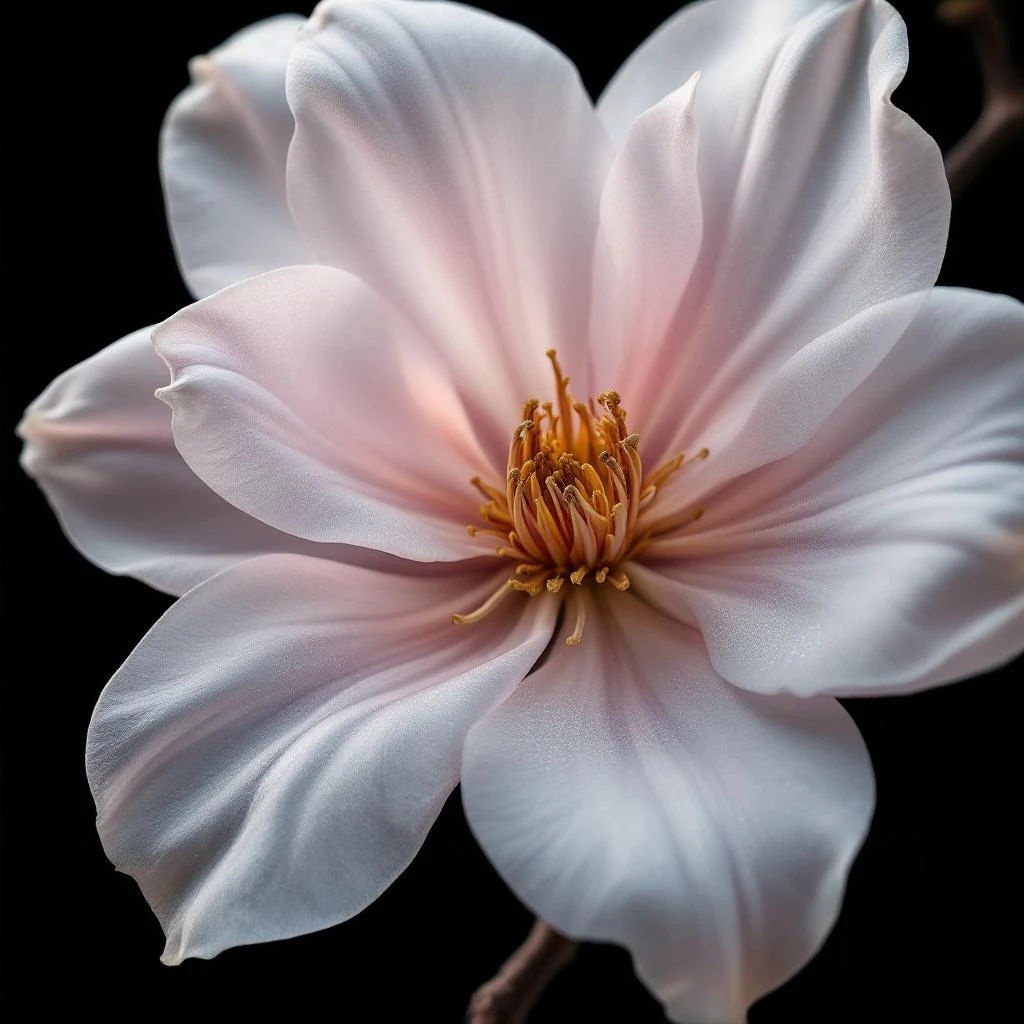
Among Earth's oldest flowering plants, magnolia has witnessed 95 million years of evolution. Its scent captures spring's first warmth: creamy, lemony, and deeply floral.
Heritage
Magnolia belongs to one of Earth's oldest flowering plant families, predating bees by millions of years. Fossil records show magnolia species blooming alongside dinosaurs roughly 95 million years ago, during an era when beetles served as primary pollinators. The plant's evolutionary ancient origins give its fragrance a primal, untamed quality rarely found in more recent floral species. John Banister, an English missionary and naturalist, first sent Magnolia specimens to Henry Compton, Bishop of London and an avid gardener, in 1687, marking the flower's introduction to European botanical circles. Western horticulturists soon encountered the elegant Chinese species, Magnolia denudata and Magnolia liliiflora, followed by Japan's delicate Star Magnolia (Magnolia stellata) in the mid-nineteenth century. French and Italian nurseries began cultivating magnolia extensively at the century's end, spreading the tree throughout Mediterranean gardens. Traditional Asian medicine long valued magnolia bark and flowers for therapeutic properties, using preparations to soothe anxiety, ease digestion, and relieve discomfort. The flower's cultural significance across China, Japan, and Korea informed its adoption into Western perfumery traditions, where it now occupies a cherished niche among sophisticated fragrance enthusiasts.
At a Glance
2
Feature this note
Multiple (Natural origin: China)
Primary source region
Ingredient Details
Synthetic accord
Laboratory-recreated aromatic compounds
Did You Know
"Beetles, not bees, first pollinated magnolias. These ancient creatures still harvest magnolia pollen today, drawn to its protein-rich bounty."