Character
The Story of Olive Blossom
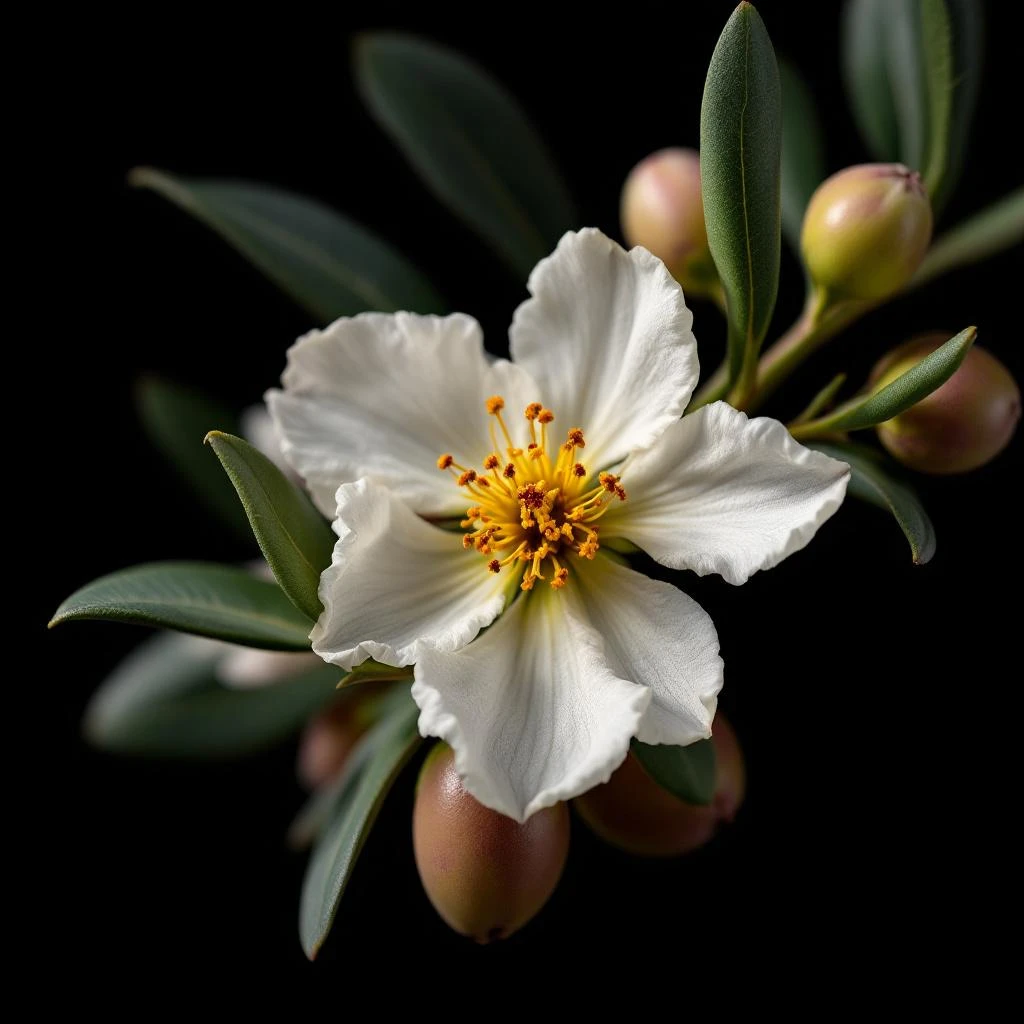
A quiet masterpiece of Mediterranean perfumery. Olive blossom carries the white floral essence of ancient groves—green, slightly bitter, and unexpectedly sweet—woven into the story of perfumery since antiquity.
Heritage
While olive oil anchored ancient perfumery as a base medium, the olive tree's blossoms themselves remained largely unnoticed until recent centuries. Greek perfumers of the classical period worked extensively with olive oil as a carrier, selecting specific olive varieties known as 'raw' and 'coarse' for their minimal greasiness—these were the preferred grades for blending with aromatic extracts. Archaeological discoveries at the Cyprus perfumery site (1850 BC) revealed that ancient practitioners combined botanical extracts with olive oil to create their fragrances, establishing practices that would shape Mediterranean perfumery for millennia. The Arabs and Persians later refined extraction techniques, introducing steam distillation and new materials to the region, though olive blossom remained primarily associated with its oil rather than its flowers. True isolation of the blossom's scent became possible only with the advent of modern solvent extraction in the late 19th century, when houses like Antoine Chiris pioneered the techniques needed to capture these delicate aromatics. Today, olive blossom remains a niche ingredient, appearing in only a handful of prestigious fragrances each year.
At a Glance
1
Feature this note
Greece
Primary source region
Ingredient Details
Solvent extraction
Fresh flowers
Did You Know
"A single olive tree can produce up to 50,000 flowers in a single season, yet olive blossom absolute requires millions of blossoms to produce just one kilogram."