
Character
The Story of Quince
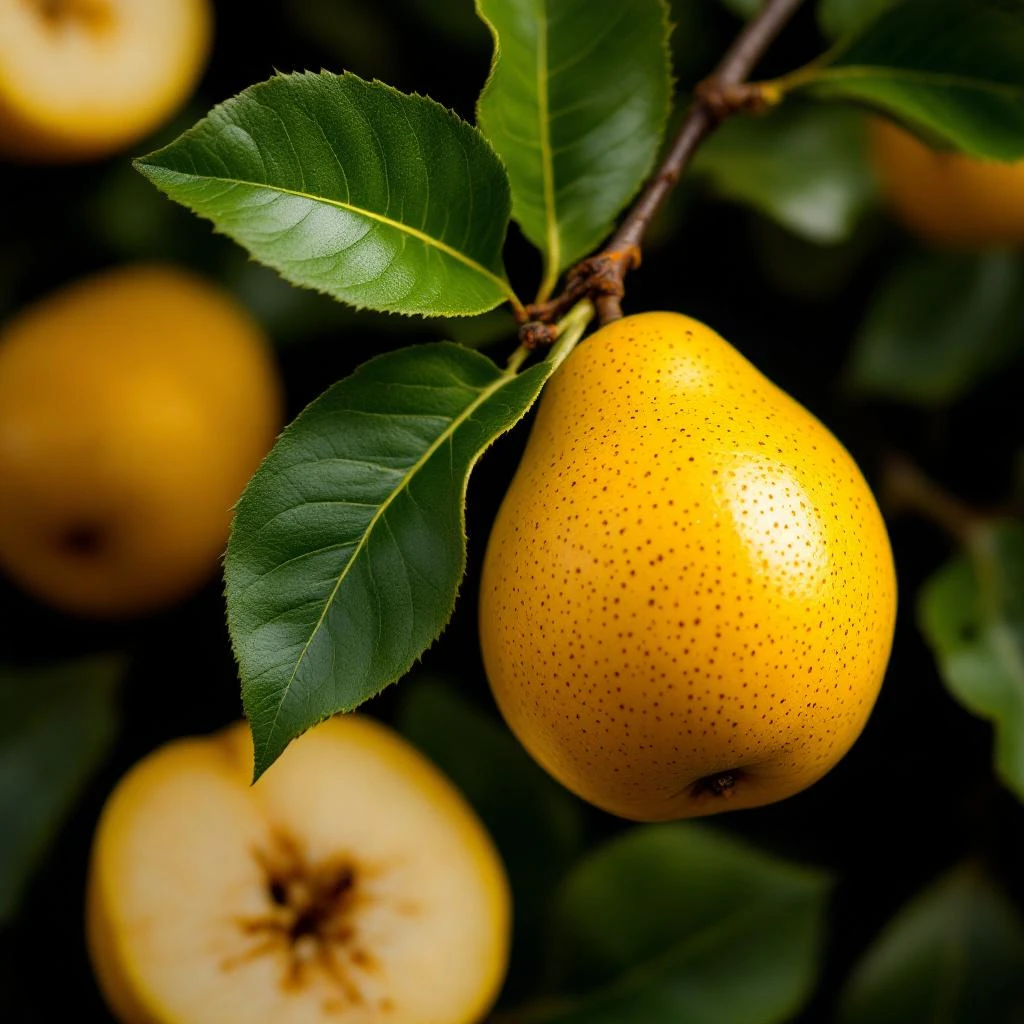
Quince bridges the gap between pear and apple, offering a translucent, honeyed sweetness that lifts floral compositions without overwhelming them. Its rarity in both gardens and formulas makes it a quietly coveted note.
Heritage
Quince carries one of perfumery's oldest documented lineages. Ancient Arab perfumers, Greeks, and Romans all worked with this fruit, steeping it in oil to create fragrances. The Greeks named their quince blossom perfume Melinum, marking it as a cornerstone of early Western perfumery. Beyond fragrance, quince held ritual significance in Mediterranean cultures. Brides carried quince at weddings as symbols of love and fertility. The Romans believed the fruit aided digestion, prescribing it medicinally. Despite this rich heritage, quince remains uncommon in contemporary gardens, making it a quiet relic of perfumery's ancient roots.
At a Glance
1
Feature this note
Iran
Primary source region
Ingredient Details
Synthetic recreation via aroma compounds
Fruit and flowers (historical maceration)
Did You Know
"Ancient Romans and Greeks steeped quince in oil to create Melinum, one of the earliest recorded perfumes, predating modern distillation by millennia."