Character
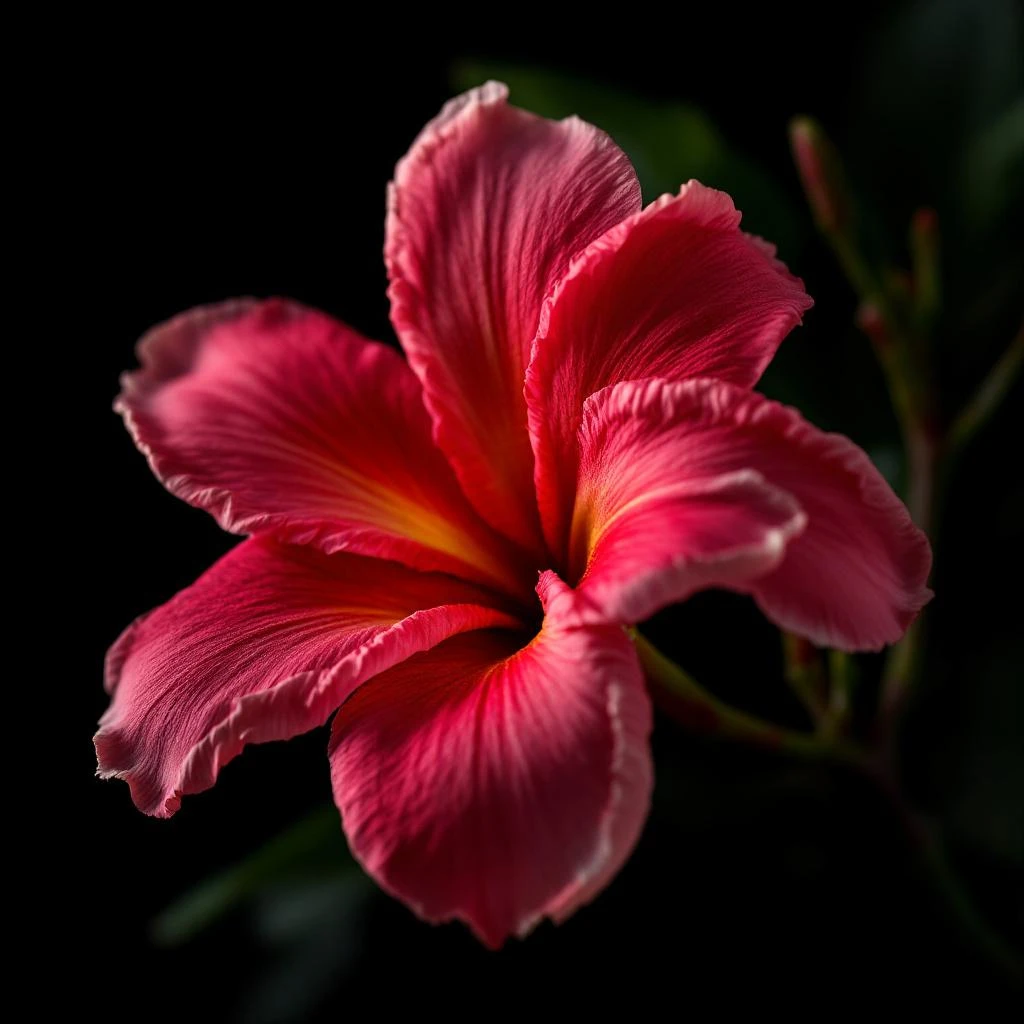
The Story of Red frangipani
Frangipani is paradise in a flower. That lush, creamy scent of warm tropical nights you recognize in fragrances from Kenzo Amour to Annick Goutal Songes does not come from a bottle. It is almost always a reconstruction built by the perfumer.
Heritage
The name 'frangipani' belongs to an Italian nobleman, not a flower. In the 16th century, Marquis Muzio Frangipani created a perfume of orris, spices, civet musk, and wine that was used to scent gloves, producing what were known as 'Frangipani gloves' across Europe. When a French colonist later encountered a heavily scented tropical plant in the West Indies, its fragrance was instantly familiar. He named that plant Plumeria after Charles Plumier, the French botanist who described it, but the flower inherited the name 'frangipani' from the glove perfume. This is one of the rare cases where a plant took its name from a fragrance rather than the reverse. Across Southeast Asia and the Pacific Islands, frangipani carries deep cultural weight: planted beside graves in Malaysia and Indonesia, offered on temple altars in Bali, woven into wedding leis in Hawaii, exchanged between brides and grooms in India. Its continuous blooming was seen as a symbol of eternal life. The flowers release their fragrance at night to attract pollinators, a trait that made them central to sacred scenting rituals predating modern perfumery by millennia.
At a Glance
1
Feature this note
India
Primary source region
Ingredient Details
Solvent extraction (small-scale) or enfleurage
Fresh flower petals
Did You Know
"The word 'frangipani' predates the plant itself. The flower was named after a 16th-century Italian perfumer, not the other way around."