Character
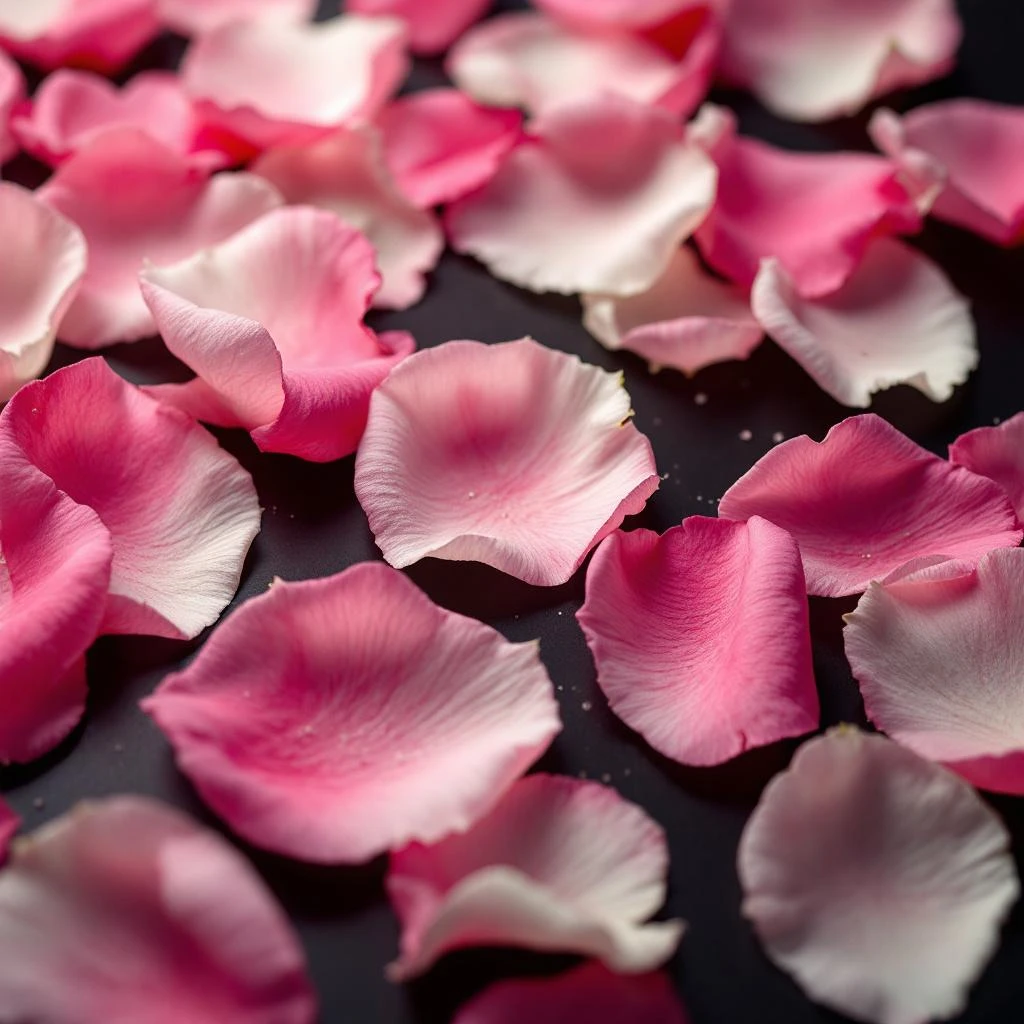
The Story of Rose Petals
The queen of florals. Rose petals yield two prized extracts used as heart notes and natural fixatives across fine fragrance: Damask and Centifolia rose. Their scent profile spans honeyed sweetness, spicy warmth, and dewy freshness.
Heritage
The rose's use in fragrance traces back over three millennia. Ancient Egyptians extracted perfume from rose petals for religious rituals and beauty treatments, while Persians and Greeks further developed rose unguents. During lavish Roman banquets under Emperor Nero, rose petals carpeted floors and hung from ceilings to perfume the air. The pivotal breakthrough came in the 11th century when Persian physician Ibn Sina refined steam distillation, allowing perfumers to isolate rose water for the first time. By the 18th century, Arab and Berber communities in Morocco had industrialized rosewater production. In 1840, Jean-François Houbigant created "Eau de Cologne à la Rose," cementing rose's place as a cornerstone ingredient of modern perfumery. Today, Damask and Centifolia remain the two most prized species, cultivated across Iran, Turkey, Morocco, and France's Grasse region.
At a Glance
1
Feature this note
Iran
Primary source region
Ingredient Details
Steam distillation / Solvent extraction
Flower petals
Did You Know
"It takes roughly 5,000 kilograms of rose petals to produce just one kilogram of rose Otto essential oil through steam distillation."