Character
The Story of Sicilian almond
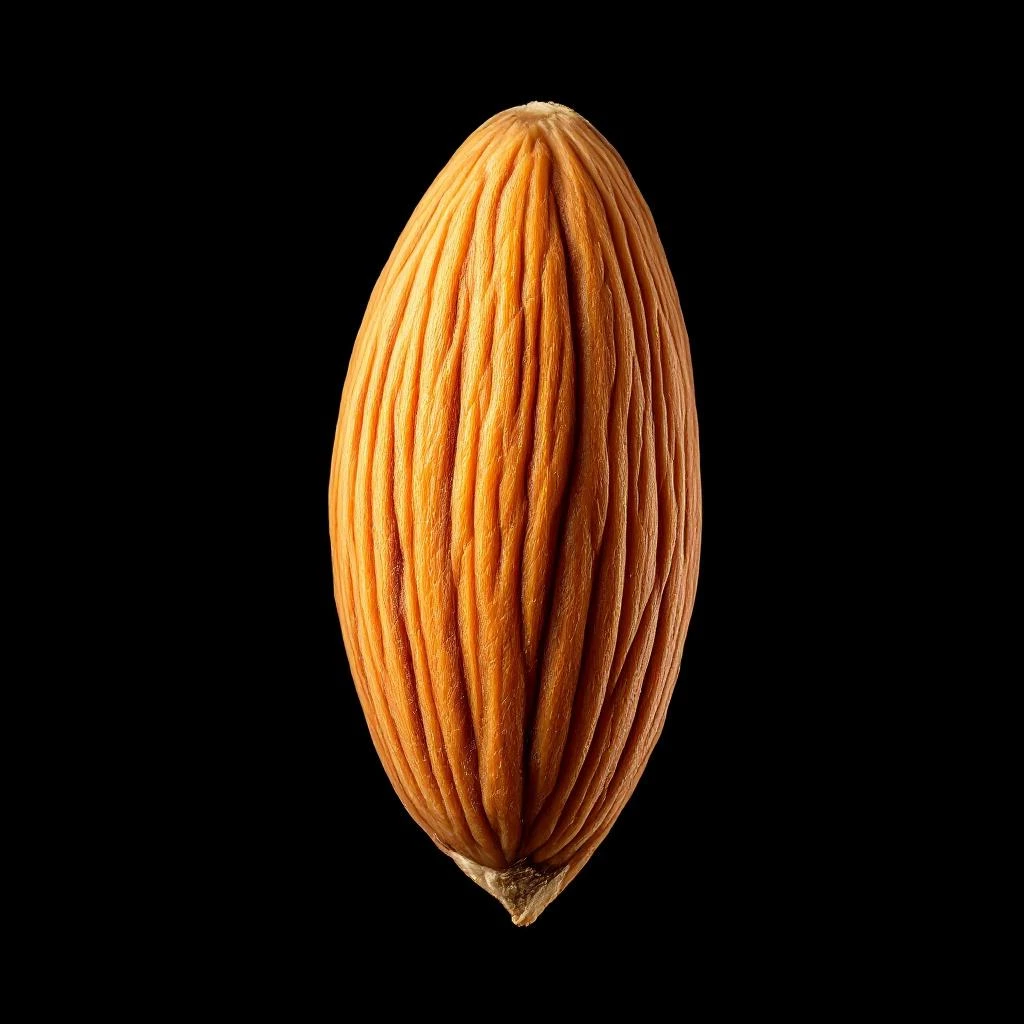
Sicilian almond brings a warm, sweet, and slightly bitter kernel note to perfumery. Extracted primarily from apricot kernels via hydrodistillation, it provides the characteristic benzaldehyde signature that adds depth and gourmand warmth to fragrance compositions as a base note.
Heritage
Almond trees have flourished across Sicily since antiquity, with archaeological evidence suggesting cultivation along the island's coastal regions during Greek colonization. The ancient Greeks called the almond tree "amygdala," a term that eventually evolved into our modern English word. Sicily's position as a Mediterranean trading hub meant almonds became prized commodities, exchanged alongside spices and resins that shaped the early perfume trade. By the nineteenth century, perfumers began systematically extracting almond essence from Sicilian kernels, discovering that hydrodistillation yielded benzaldehyde with remarkable efficiency. This discovery coincided with the emergence of the modern perfume industry, positioning Sicilian almond as a foundational ingredient in early French perfumery. Héliotrope Blanc by Pivert, released in 1850, stands as the first perfume to explicitly celebrate almond as its primary note, establishing a tradition that continues in contemporary fragrances like L'Homme Idéal by Guerlain.
At a Glance
1
Feature this note
Italy
Primary source region
Ingredient Details
Hydrodistillation of apricot kernels
Kernel (seed)
Did You Know
"Sicily produces approximately 1,200 tonnes of almonds annually, with the region around Agrigento supplying most of Europe's winter almond demand."