Character
The Story of Water Jasmine
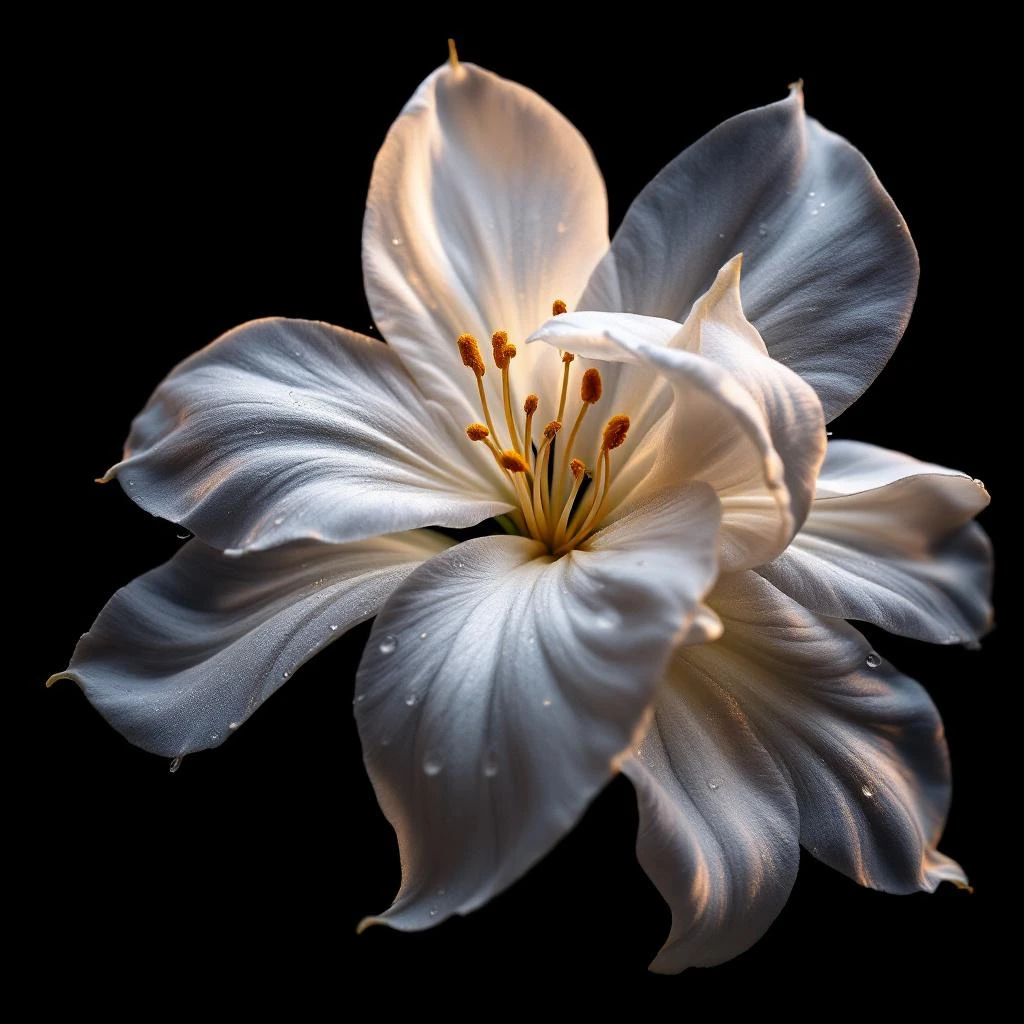
Water Jasmine captures the luminous, dewy facets of jasmine — its cool transparency and delicate floral sweetness — reimagined through a prism of aquatic clarity. This note evokes the flower at first light, when morning dew rests on petals and the air carries its intimate fragrance.
Heritage
Jasmine has been woven into human culture for millennia. The Egyptians used it as early as 1,000 BCE in sacred rituals and body care. Iranians cultivated jasmine alongside roses after the Islamic era, and these flowers were native to the Iran region. Persian traders and perfumers refined extraction techniques through steam distillation. In the 16th century, Arabs introduced jasmine to Europe through Spain, and its cultivation spread to Grasse, France, where it became the cornerstone of classical perfumery. By the 18th century, Grasse held the title of world capital of perfumery jasmine. In 1957, scientists isolated methyl jasmonate from jasmine absolute, leading to the synthesis of hedione — a discovery that radically transformed modern fragrance creation. Today, jasmine remains one of the most prized and versatile materials in a perfumer's palette.
At a Glance
3
Feature this note
India
Primary source region
Ingredient Details
Solvent extraction
Flower petals
Did You Know
"Jasmine flowers must be picked by hand at dawn, when their oil concentration peaks. A single kilogram of jasmine absolute requires roughly one million hand-picked flowers."
Pyramid Presence