Character
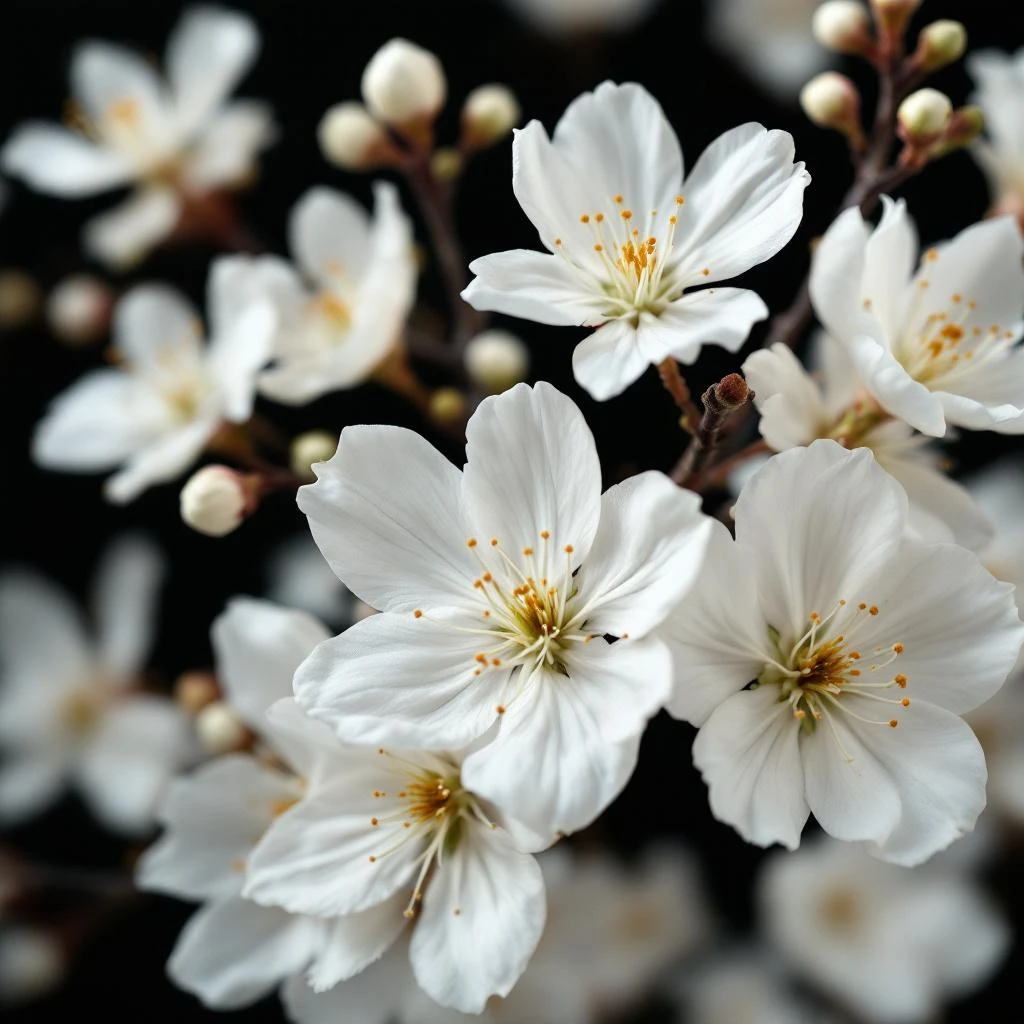
The Story of White Blossoms
White blossoms encompass jasmine, gardenia, tuberose, and orange blossom. Their creamy, indolic signatures form the luminous heart of countless iconic fragrances, lending warmth and radiance to compositions across every fragrance family.
Heritage
White blossoms have shaped perfumery across millennia. Jasmine arrived in Grasse during the sixteenth century via Moroccan traders, transforming southern France into the epicentre of its global cultivation. Islamic scholars advanced the science of extraction significantly. Ibn Sina pioneered steam distillation, a technique that enabled liquid perfume production and spread through Arab trade networks into Europe. Bitter orange trees spread from China through Islamic cultivation to the Mediterranean, where orange blossom became integral to perfumery. By the eighteenth century, white florals defined the French court. Madame de Pompadour commissioned generous quantities of floral fragrances, and the tradition of scenting private spaces with white blossoms became established practice across European nobility.
At a Glance
1
Feature this note
India
Primary source region
Ingredient Details
Solvent extraction and steam distillation
Flower petals and blossoms
Did You Know
"Jasmine must be harvested before sunrise when its scent glands are most active. One million blossoms yield roughly one kilogram of absolute."