
Character
The Story of Wintersweet
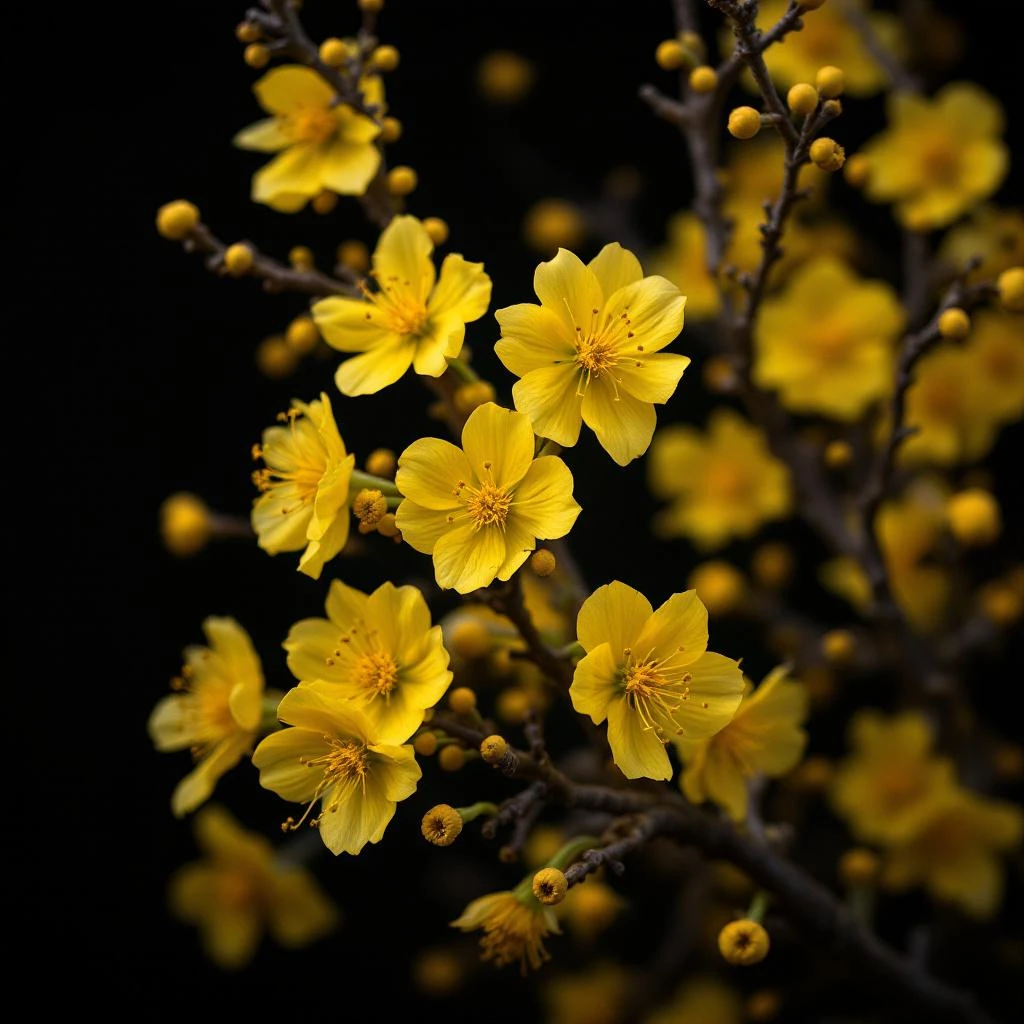
Wintersweet, the winter‑blooming shrub native to China, releases a crisp green scent brushed with honeyed warmth and a faint powdery edge. Its rare fresh profile appears when most plants lie dormant, offering perfumers a bright, cool accent that endures through the cold season. The oil captures the essence of early frost, delivering a subtle sweetness that balances bright foliage with a lingering, comforting depth. Its nuanced profile makes it a favorite for winter‑themed compositions and niche blends seeking natural clarity.
Heritage
Wintersweet (Chimonanthus praecox) has been cultivated in China for over a thousand years, where it appears in classical poetry as a symbol of resilience in winter. Ancient Chinese texts from the Tang dynasty describe the plant’s fragrant branches being hung in palace chambers to mask the chill of the season. By the early 1900s, European traders introduced dried wintersweet buds to France, where perfumers experimented with the scent in winter‑themed blends. A 1913 Parisian trade catalogue listed a "Chimonanthus absolute" as a novel top note, marking its entry into Western perfumery. The ingredient gained popularity in the mid‑20th century among niche houses seeking natural alternatives to synthetic winter notes. Throughout its history, wintersweet has remained valued for its ability to evoke fresh cold air while delivering a subtle sweetness, a combination that few other natural materials can match. Today, sustainable cultivation in Chinese provinces such as Hubei and Jiangsu supports both traditional uses in tea and incense and modern applications in high‑end fragrances.
At a Glance
1
Feature this note
China
Primary source region
Ingredient Details
Solvent extraction
Fresh flower buds
Did You Know
"Wintersweet blooms on bare branches in December, and its essential oil can be extracted from fresh buds within 48 hours of picking, preserving its fleeting aroma. The plant’s fragrance was prized by Tang dynasty courtiers, who used it to scent winter banquets, believing the scent warded off cold spirits."