






The Heritage
The Story of Prin
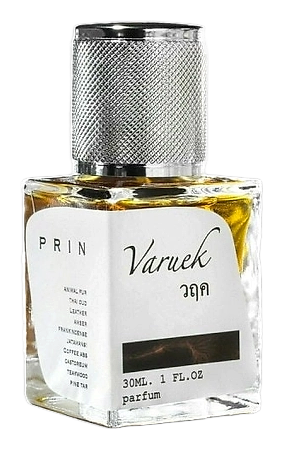
Prin is an artisan fragrance house rooted in Bangkok, Thailand. Founded by self‑taught perfumer Prin Lomros, the label creates small‑batch scents that blend cinematic storytelling with locally sourced ingredients. Each release arrives in a minimalist bottle that lets the perfume speak for itself, inviting wearers to explore a quiet, nuanced world of aroma. The brand’s catalogue, which includes titles such as Krissana (2023) and Varuek (2021), reflects a commitment to craft over commerce, offering collectors a glimpse into a personal olfactory archive.
Heritage
Prin’s story begins with Prin Lomros, whose early career unfolded at The Perfumer's World, one of Thailand’s leading fragrance manufacturers. After years of hands‑on formulation, Lomros left the corporate setting to pursue an independent path, establishing his own label in Bangkok. The brand’s first public offerings appeared around 2020, when the fragrance Mriga entered the market, signaling a shift toward niche, narrative‑driven perfume making in Southeast Asia. Over the next few years, Prin expanded its portfolio with releases such as Anatolia (2021), Onthamara (2022), and the dual 2023 launches of Krissana and Mongolian Mriga. Each launch was accompanied by limited production runs, reinforcing the house’s focus on exclusivity through scarcity rather than mass distribution. In 2023 the brand announced a list of discontinued scents, citing material shortages that forced the retirement of certain formulas. This transparency underscored Prin’s dedication to ingredient integrity, even when it meant pulling products from the line. By 2025, the house introduced Kheerin, a fragrance that continued its trajectory of exploring regional botanicals while maintaining a cinematic scent narrative. Throughout its evolution, Prin has remained anchored in Bangkok, drawing inspiration from Thai culture, geography, and the city’s vibrant creative scene. The brand’s modest yet steady growth reflects a broader movement within the global perfume community toward artisanal, story‑centric creations that prioritize artistic vision over commercial scale.
Craftsmanship
Every Prin fragrance begins with a scent sketch drawn by Lomros in his Bangkok studio. The perfumer experiments with accords using small vials, documenting each variation before selecting a final composition. Ingredients are sourced from regional growers whenever possible; for example, the house has worked with farms in northern Thailand to obtain wild ginger and rare jasmine varieties. When a material is unavailable, the team conducts a transparent review, sometimes choosing to discontinue the scent rather than substitute a synthetic analogue. Production takes place in a modest laboratory that adheres to industry‑standard safety protocols, with each batch limited to a few hundred millilitres. Quality control involves both olfactory testing by Lomros and third‑party laboratory analysis to confirm concentration levels and stability. Bottles are hand‑filled, and each is sealed with a simple cap that reflects the brand’s understated visual language. The label’s packaging uses recycled paper and soy‑based inks, aligning with its sustainability goals. Throughout the process, the emphasis remains on preserving the original artistic intent, ensuring that every bottle delivers the intended narrative without dilution or compromise.
Design Language
Prin’s visual identity mirrors its olfactory restraint. Bottles feature a clear, slim glass vessel with a thin, matte black or brushed metal cap, allowing the perfume’s colour to become the focal point. The label is a single line of understated typography, often printed in a muted charcoal hue. This minimalism extends to the brand’s website, where white space dominates and product images are presented without elaborate staging. Promotional photography frequently captures the scent in a narrative context—a dimly lit hallway, a misty forest, or a quiet urban balcony—reinforcing the cinematic theme. The brand’s social media feed follows the same clean grid, using muted colour palettes that echo the fragrance tones. Even the typography chosen for the logo is a simple sans‑serif, conveying modernity without flash. This cohesive aesthetic signals to the consumer that the experience is about subtle discovery rather than overt spectacle.
Philosophy
Prin’s creative vision treats fragrance as a visual medium translated into scent. Lomros describes his approach as cinematic, constructing each perfume like a scene that unfolds over time on the skin. The house values authenticity, choosing raw materials that can be traced to their origin, whether a Thai orchid field or a remote mountain herb. Sustainability informs sourcing decisions; when a botanical becomes scarce, Prin opts to pause production rather than compromise quality. The brand also embraces a minimalist aesthetic, believing that a clean bottle allows the perfume’s narrative to remain front and centre. Community plays a subtle role: Prin engages directly with a small circle of collectors, inviting feedback that can shape future releases. This dialogue reinforces the house’s belief that perfume should be a shared, evolving experience rather than a static product. By focusing on narrative depth, ingredient honesty, and a restrained visual language, Prin seeks to create scents that feel both intimate and timeless.
Key Milestones
2020
Launch of Mriga, marking Prin’s entry into the niche fragrance market.
2021
Release of Varuek and Anatolia, expanding the house’s exploration of regional botanicals.
2022
Onthamara debuts, showcasing a cinematic scent narrative inspired by Thai folklore.
2023
Krissana and Mongolian Mriga released; brand announces a list of discontinued scents due to material shortages.
2025
Kheerin introduced, continuing the focus on story‑driven, ingredient‑focused perfume creation.
At a Glance
Brand profile snapshot
Origin
Thailand
Collection
1
Fragrances released
Avg Rating
4.9
Community sentiment
Release Rhythm